How Do You Clean a Fabric Sofa
A fabric sofa adds comfort and warmth to any living space, but it can easily collect dust, stains, and odors with daily use. If you’ve been wondering how do you clean a fabric sofa without damaging the material, the good news is that regular cleaning can be simple and safe when done the right way. From accidental spills to everyday dirt, fabric sofas need proper care to stay fresh and long-lasting.
In this guide, we’ll walk you through easy, step-by-step methods to clean a fabric sofa at home, remove common stains, and keep it looking clean and comfortable for years to come.
Check the Fabric Type Before Cleaning
Before you start cleaning your fabric sofa, it’s important to understand what type of fabric it is made from. Different fabrics react differently to water, cleaning solutions, and scrubbing. Using the wrong method can cause discoloration, shrinkage, or permanent damage.
Most fabric sofas come with a care label attached under the seat cushions or along the frame. This label gives you basic cleaning instructions that help you clean the sofa safely.
Taking a few minutes to check the fabric type can save you from costly mistakes and extend the life of your sofa.
Understanding Sofa Fabric Care Labels
Fabric sofas usually come with one of the following care codes:
-
W – Can be cleaned with water-based cleaners
-
S – Should be cleaned using solvent-based cleaners only
-
WS – Safe for both water-based and solvent-based cleaners
-
X – Should only be vacuumed or professionally cleaned
If your sofa has a W or WS label, gentle home cleaning methods are usually safe. If it has an S or X label, avoid water and consider professional cleaning for best results.

Why Fabric Type Affects Cleaning Methods
Some fabrics absorb water easily, while others repel moisture. Delicate fabrics may lose color or texture if scrubbed too hard. Understanding your fabric type helps you choose the right cleaning method and prevents issues like water stains or fabric damage.
Things You’ll Need to Clean a Fabric Sofa
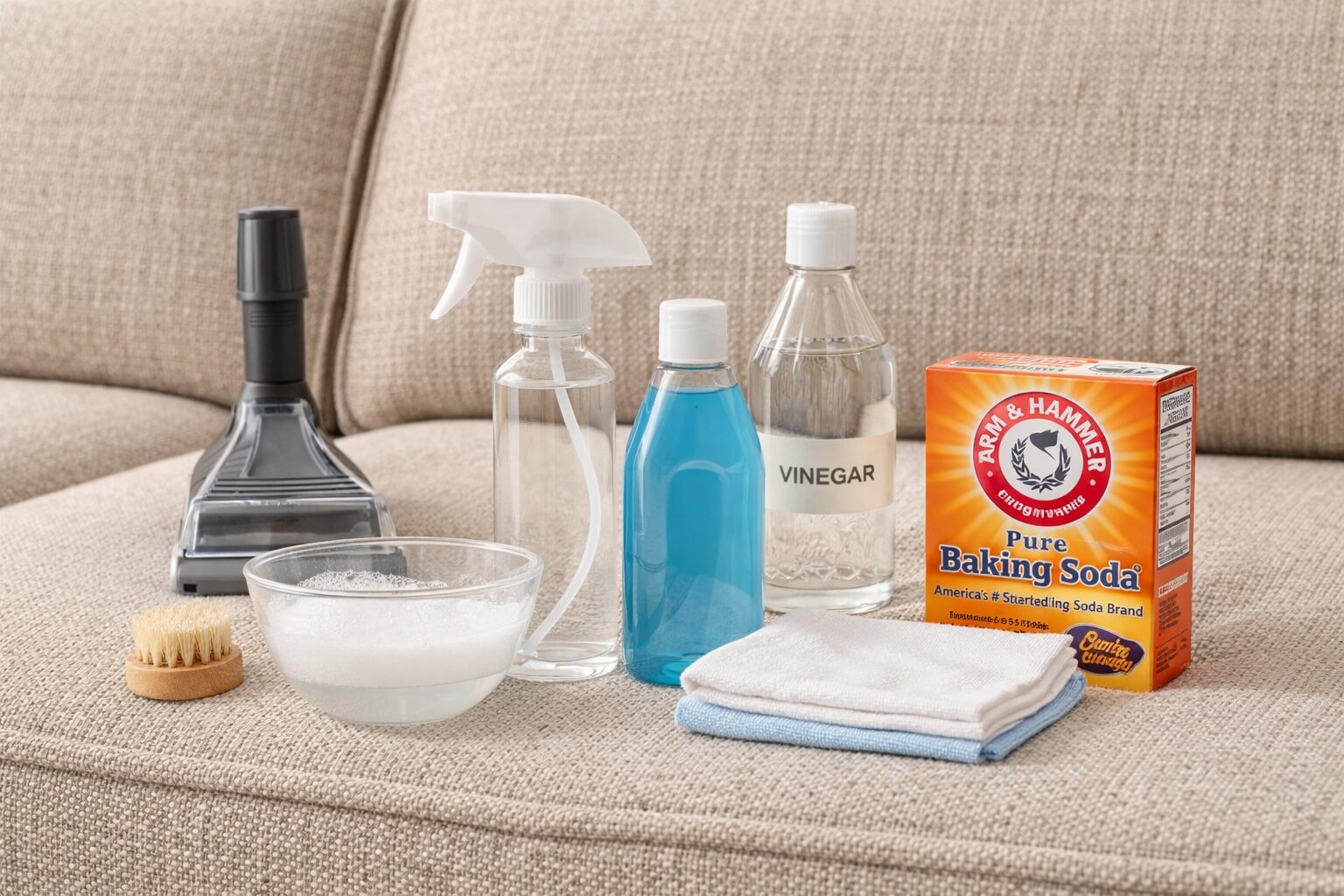
Having the right cleaning supplies ready makes the process easier and more effective. You don’t need expensive tools—most items are commonly found at home.
Preparing everything in advance also helps you clean the sofa evenly without rushing or skipping steps.
Basic Cleaning Supplies
These items are essential for regular fabric sofa cleaning:
-
Vacuum cleaner with upholstery attachment
-
Soft brush or microfiber cloth
-
Mild liquid detergent or fabric cleaner
-
Clean water
-
Dry towels or absorbent cloths
These tools help remove dust, surface dirt, and light stains without harming the fabric.
Optional Items for Deep Cleaning
For deeper cleaning or odor removal, you may also use:
-
Baking soda (for smell and moisture absorption)
-
White vinegar (for stain removal, if fabric allows)
-
Spray bottle for controlled cleaning
-
Soft sponge
Always test any solution on a small hidden area before applying it to the entire sofa.
Step-by-Step Guide to Clean a Fabric Sofa
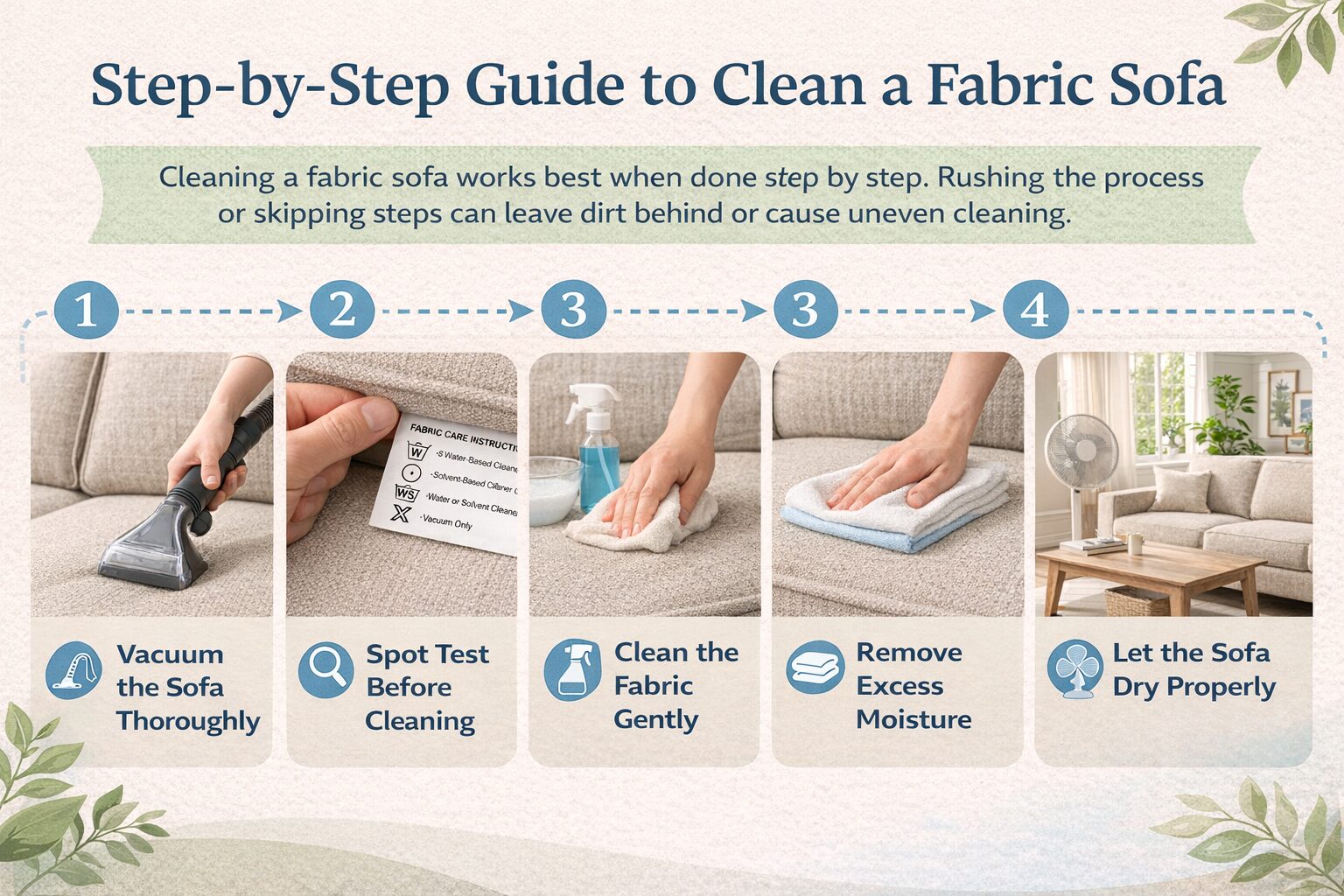
Cleaning a fabric sofa works best when done step by step. Rushing the process or skipping steps can leave dirt behind or cause uneven cleaning.
Follow these steps carefully for safe and effective results.
Step 1 – Vacuum the Sofa Thoroughly
Start by vacuuming the entire sofa, including cushions, seams, corners, and under the seats. This removes dust, crumbs, pet hair, and loose dirt that can turn into stains when mixed with water.
Use a soft upholstery attachment to avoid damaging the fabric.
Step 2 – Spot Test Before Cleaning
Before applying any cleaning solution, test it on a small hidden area of the sofa. Wait a few minutes to check for color fading or fabric damage.
If the fabric looks fine, you can continue with cleaning.
Step 3 – Clean the Fabric Gently
Mix a small amount of mild detergent with water to create a light cleaning solution. Dip a cloth or sponge into the solution, wring it well, and gently dab the fabric.
Avoid soaking the sofa. Light, circular motions work best for lifting dirt without damaging the fibers.
Step 4 – Remove Excess Moisture
After cleaning, use a dry towel to blot the area and absorb excess moisture. This helps prevent water marks and speeds up drying.
Never use a hair dryer or heater directly on the fabric.
Step 5 – Let the Sofa Dry Properly
Allow the sofa to air dry completely. Open windows or use a fan to improve airflow. Make sure the sofa is fully dry before using it again to prevent odors or mold growth.
How to Remove Common Stains from a Fabric Sofa
Stains are common on fabric sofas, especially in homes with children or pets. Acting quickly makes stain removal much easier.
Different stains need slightly different approaches.
Food and Drink Stains
Blot the spill immediately with a clean cloth. Avoid rubbing, as it pushes the stain deeper. Use a mild detergent solution and gently dab until the stain fades.
Grease and Oil Stains
Sprinkle baking soda on the stain and let it sit for 15–20 minutes to absorb oil. Vacuum it off and clean gently with a fabric-safe cleaner.
Pet Hair and Odor
Use a vacuum or lint roller to remove pet hair. For odors, sprinkle baking soda over the sofa, leave it for a few hours, and vacuum thoroughly.
Also Read: How to Remove Stains from a Mattress
How Often Should You Clean a Fabric Sofa?
Regular cleaning keeps your fabric sofa looking good and feeling comfortable. How often you clean depends on how frequently the sofa is used.
Regular Cleaning Schedule
Vacuum your fabric sofa at least once a week to remove dust and debris. Light surface cleaning helps prevent dirt buildup and keeps the fabric fresh.
Deep Cleaning Frequency
Deep clean your fabric sofa every 6 to 12 months. Homes with pets, children, or heavy use may need deep cleaning more often to maintain hygiene and appearance.
Mistakes to Avoid When Cleaning a Fabric Sofa
Many fabric sofas get damaged not because they are hard to clean, but because of common cleaning mistakes. Avoiding these errors can help maintain the look, texture, and lifespan of your sofa.
Understanding what not to do is just as important as knowing the correct cleaning steps.
Using Too Much Water
One of the biggest mistakes is using excessive water while cleaning a fabric sofa. Too much moisture can soak into the cushions, leading to water stains, unpleasant odors, and even mold growth.
Fabric sofas should always be cleaned with minimal moisture. Dampen the cloth lightly instead of pouring water directly onto the fabric.
Using Harsh or Chemical Cleaners
Strong chemicals, bleach, or multi-purpose cleaners can damage fabric fibers and cause discoloration. These products may seem effective at first but often weaken the fabric over time.
Always use mild detergent or fabric-safe cleaners and avoid anything not meant for upholstery.
Scrubbing the Fabric Aggressively
Scrubbing too hard can damage the fabric texture and cause the fibers to fray or pill. It can also spread stains instead of removing them.
Gentle dabbing or light circular motions are always safer and more effective.
Skipping the Spot Test
Skipping a spot test can result in permanent damage. Even mild cleaning solutions can react differently with various fabrics.
Always test on a hidden area before cleaning the main surface.
Tips to Keep Your Fabric Sofa Clean for Longer
Regular care and small habits can greatly reduce the need for frequent deep cleaning. These simple tips help maintain cleanliness and keep your sofa looking fresh for years.
Daily and Weekly Care Tips
Light daily care goes a long way. Fluff cushions regularly to prevent uneven wear and remove surface dust.
Vacuum your sofa weekly, especially in high-use areas like armrests and seat cushions. This prevents dirt from settling deep into the fabric.
Protecting Your Sofa from Spills and Stains
Using removable cushion covers or throws can protect the sofa from spills and stains. These are easy to wash and help preserve the original fabric.
Try to keep food and drinks away from the sofa whenever possible. If a spill happens, blot it immediately before it sets.
Managing Pet Hair and Odors
If you have pets, use a lint roller or vacuum frequently to remove hair. Regularly deodorizing the sofa with baking soda helps keep it smelling fresh.
Good airflow in the room also helps prevent odors from settling into the fabric.
Is Professional Sofa Cleaning Necessary?
While home cleaning is effective for regular maintenance, professional cleaning can be helpful in certain situations. Knowing when to call professionals can save time and prevent damage.
When Home Cleaning Is Enough
For light stains, dust, and regular maintenance, home cleaning methods are usually sufficient. As long as you follow fabric care instructions, you can safely clean your sofa at home.
Regular vacuuming and occasional spot cleaning keep most sofas in good condition.
When to Consider Professional Cleaning
Professional cleaning is recommended if the sofa has deep stains, strong odors, or delicate fabric types marked with an “X” or “S” care label.
It’s also a good option for sofas that haven’t been cleaned for a long time or for households with allergies, as professionals can remove deeply trapped dust and allergens.
Conclusion
Cleaning a fabric sofa doesn’t have to be complicated. With the right approach, gentle cleaning methods, and regular care, you can keep your sofa fresh, comfortable, and long-lasting. Understanding your fabric type, avoiding common mistakes, and maintaining a consistent cleaning routine makes all the difference.
A well-maintained sofa not only looks better but also creates a healthier and more inviting living space. With proper care, your fabric sofa can remain a centerpiece of comfort in your home for many years.
Frequently Asked Questions (FAQs)
Can I clean a fabric sofa with water?
Yes, most fabric sofas with a “W” or “WS” care label can be cleaned with water-based solutions. However, always use minimal water and test first to avoid damage.
Can baking soda damage a fabric sofa?
Baking soda is generally safe when used correctly. It helps absorb odors and moisture, but it should always be vacuumed thoroughly after use.
How do I remove bad smells from a fabric sofa?
Sprinkle baking soda evenly over the sofa, leave it for a few hours or overnight, and vacuum it off. Proper ventilation also helps remove lingering odors.
Is steam cleaning safe for fabric sofas?
Steam cleaning can be effective but is not suitable for all fabric types. Always check the care label before using steam, and avoid over-saturating the fabric.
How long does a fabric sofa take to dry after cleaning?
Drying usually takes 4 to 12 hours, depending on airflow, humidity, and how much moisture was used. Ensure the sofa is completely dry before use.



Leave A Comment
You must be logged in to post a comment.