How to Measure Your Room for Furniture
How to measure your room for furniture is one of the most important steps before buying any sofa, bed, table, or wardrobe. Many people skip this step and end up with furniture that feels too big, blocks walkways, or doesn’t fit through doors. Proper room measurement helps you plan layout, maintain comfortable walking space, and choose furniture that fits both your room and lifestyle. Whether you’re furnishing a new home or upgrading an existing space, knowing the right way to measure your room can save time, money, and frustration. This guide will walk you through simple, practical steps to measure accurately and plan furniture with confidence.
What You Need Before Measuring Your Room
Before you start measuring your room for furniture, it’s important to gather a few basic tools. Having the right items ready will make the process easier, faster, and more accurate. You don’t need anything complicated—most of these tools are already available at home.
The most important tool is a measuring tape. A steel measuring tape is best because it stays straight and gives accurate measurements over longer distances. If you don’t have one, a soft tape can still work for smaller rooms, but you’ll need to be extra careful to keep it straight.
You’ll also need a notepad and pen or your phone to write down measurements. Relying on memory often leads to mistakes, especially when measuring multiple walls, doors, and windows. Writing everything down clearly helps later when planning furniture placement.
Optional but helpful tools include a laser distance measurer for quick measurements and a room planning app if you prefer digital layouts. These tools are not required, but they can make measuring more convenient and precise.
How to Measure Your Room for Furniture (Step-by-Step Guide)
Measuring your room correctly is the foundation of good furniture planning. Follow these steps carefully to avoid costly mistakes and ensure your furniture fits comfortably.
Measure the Length and Width of the Room
Start by measuring the length and width of the room. Place the measuring tape against one wall and extend it straight to the opposite wall. Measure at floor level, as this gives the most accurate usable space for furniture.
Record the full length and width of the room. If the room is not perfectly rectangular, measure at multiple points to capture the smallest usable dimensions. This helps prevent buying furniture that fits only in one part of the room but not another.
Always measure in one unit system, either centimeters or feet and inches, to avoid confusion later when comparing furniture sizes.
Measure Ceiling Height
Ceiling height is often overlooked, but it’s very important—especially for tall furniture like wardrobes, shelves, or bunk beds. Measure from the floor to the ceiling at several points in the room.
If your room has a false ceiling, beams, or sloped areas, measure those separately. These details matter when choosing tall furniture or wall-mounted storage.
Knowing your ceiling height also helps ensure proper airflow and prevents furniture from making the room feel cramped.
Measure Doors, Windows, and Openings
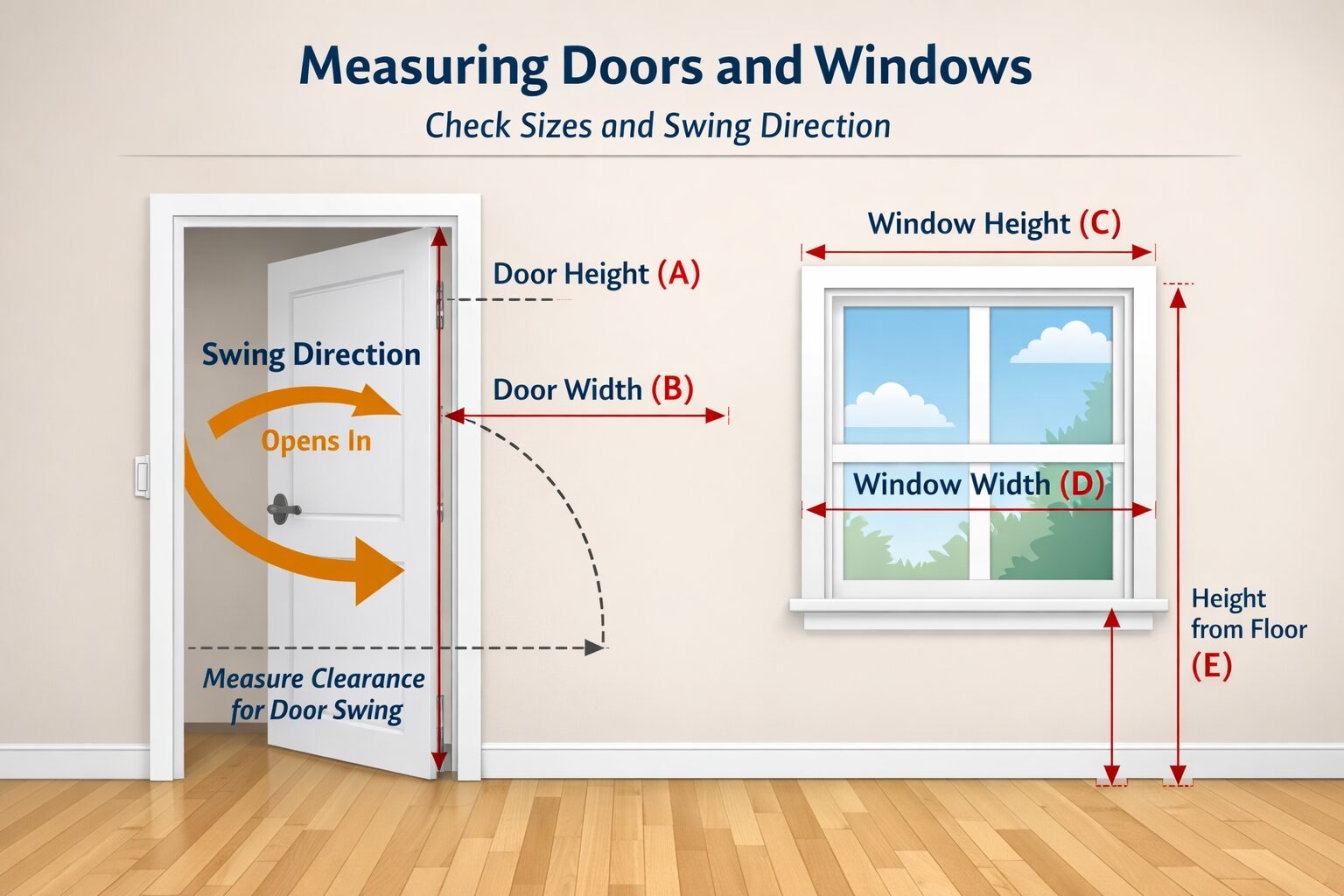
Next, measure all doors, windows, and entry points. Measure door width, height, and note the direction the door opens. Furniture must be able to pass through doors during delivery.
Measure window height from the floor and note their position on the wall. This helps avoid placing furniture that blocks natural light or access to windows.
Also note the position of switches, power outlets, and vents, as furniture should not block them.
How to Measure Furniture Space Properly
Once you know your room’s dimensions, the next step is understanding how much space furniture will actually need. Furniture doesn’t just occupy floor space—it also needs room for movement, access, and comfort.
Allow Space for Walking and Movement
A common mistake is filling the room with furniture without leaving enough space to walk comfortably. As a general rule, allow at least 75–90 cm (30–36 inches) of walking space in main pathways.
For bedrooms, leave enough space around the bed to move easily. In living rooms, ensure clear walking paths between seating areas, doors, and hallways.
Good spacing improves comfort, safety, and makes the room feel more open and balanced.
Account for Furniture Depth and Door Clearance
Furniture depth is just as important as width and length. Sofas, wardrobes, and cabinets often need extra space in front for doors, drawers, or pull-out sections.
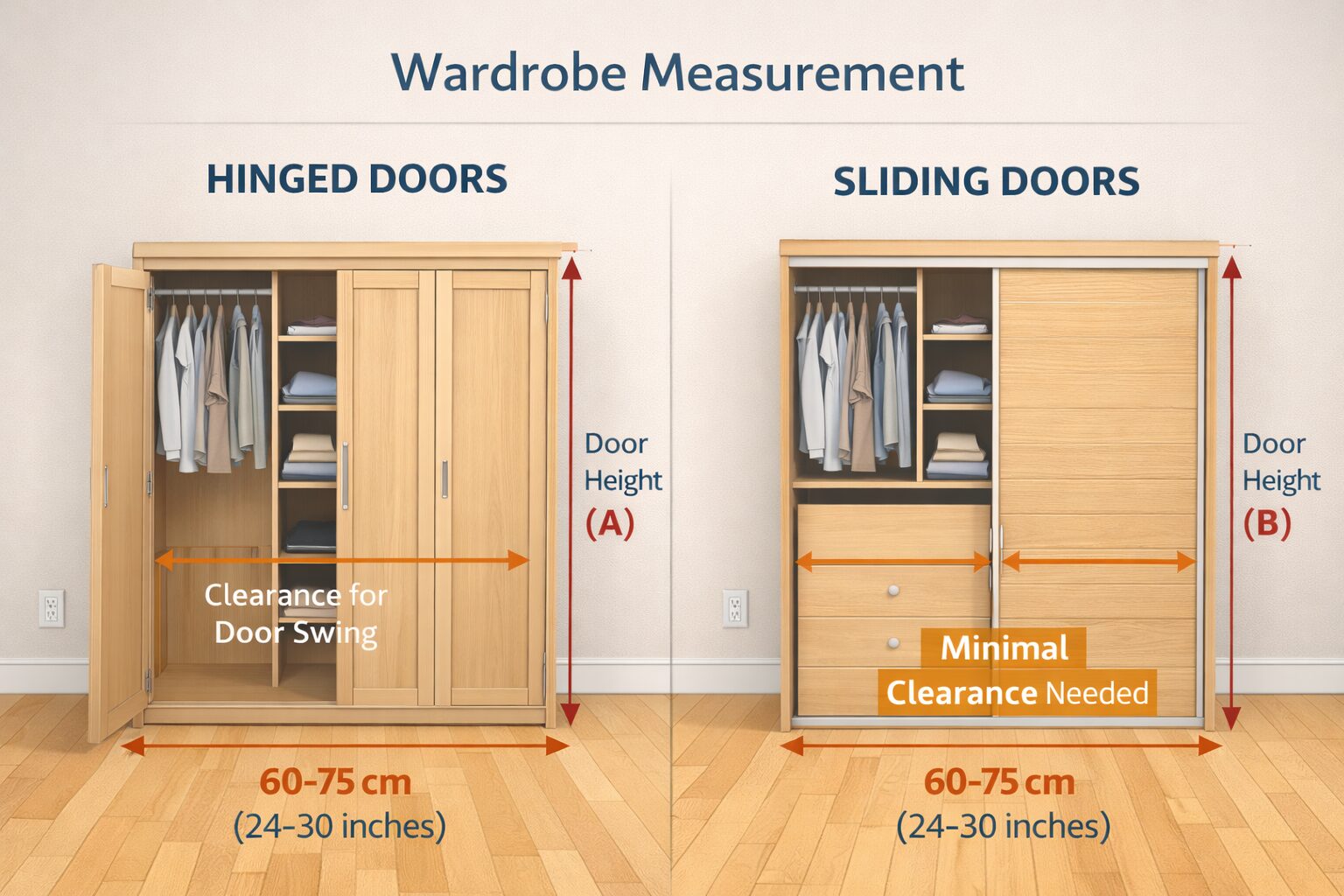
For example, wardrobes with hinged doors need more clearance than sliding-door wardrobes. Sofas with recliners or pull-out beds also require additional space when fully extended.
Always check furniture dimensions carefully and add extra clearance to avoid tight or unusable layouts.

Room Measurement Tips for Different Furniture Types
Different types of furniture require different measurement considerations. Measuring your room with specific furniture in mind helps avoid poor layout decisions and ensures comfort and functionality.
Measuring a Room for a Sofa
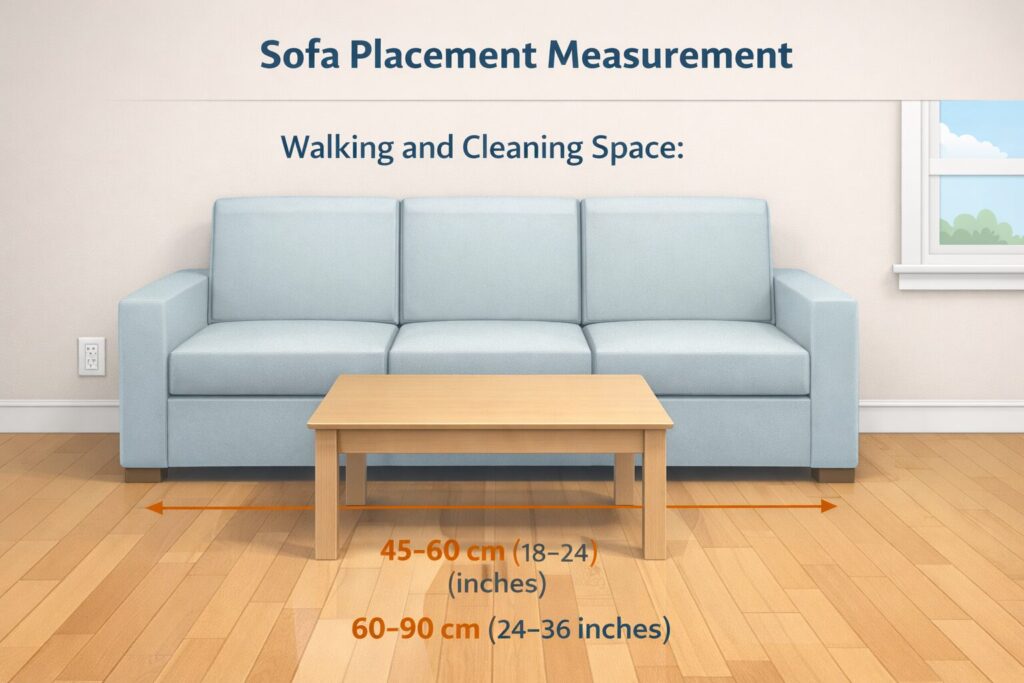
When measuring a room for a sofa, start by identifying where the sofa will be placed. Measure the wall length and ensure the sofa does not block doors, windows, or walkways. Leave enough space behind or in front of the sofa for walking and cleaning.
Also consider the sofa depth. Deep sofas may look comfortable but can take up more space than expected. If you plan to add a coffee table, leave enough room between the sofa and table to move comfortably.
Measuring a Room for a Bed
Beds are often the largest piece of furniture in a bedroom, so measuring accurately is essential. Measure the available wall space where the bed will go and compare it with the bed size you plan to buy.
Leave space on both sides of the bed for easy access, especially if two people will use it. Also measure space for bedside tables, wardrobes, and walking paths to avoid a crowded feel.

Measuring a Room for Wardrobes and Cabinets
Wardrobes and cabinets need careful planning, especially in smaller rooms. Measure wall height and width, and check if doors will open fully without hitting other furniture.
If space is limited, consider sliding-door wardrobes. Also measure the depth of cabinets to ensure they don’t block walking areas or doorways.
Common Mistakes to Avoid When Measuring Your Room
Many people make small but costly mistakes when measuring their room for furniture. Being aware of these errors can save time, money, and frustration.
One common mistake is measuring only once. Always double-check your measurements to avoid inaccuracies. Another mistake is ignoring skirting boards, moldings, or uneven walls, which can affect how furniture fits.
People often forget to measure doorways and hallways, leading to delivery problems. Not accounting for door swings, drawer openings, and walking space is another frequent issue that can make rooms feel cramped.
Taking time to measure carefully and plan properly helps avoid these problems.
How to Use Room Measurements for Furniture Planning
Once you have accurate measurements, the next step is turning those numbers into a practical furniture layout. This helps you visualize the space before buying anything.
Start by drawing a simple floor plan on paper using your room measurements. Mark doors, windows, and fixed elements. Then sketch furniture pieces to scale to see how they fit.
You can also use masking tape on the floor to outline furniture dimensions. This gives a real-life sense of space and movement.
For digital users, room planning apps and online tools allow you to test different layouts easily and make smarter furniture choices.

Room Size vs Furniture Size (Quick Reference Guide)
Understanding how room size relates to furniture size makes decision-making much easier. Choosing furniture that matches your room dimensions helps maintain balance, comfort, and usability.
For small rooms, compact furniture works best. Choose slim sofas, single or queen beds instead of king beds, and wardrobes with sliding doors. Multi-functional furniture like storage beds or foldable tables can save space and reduce clutter.
For medium-sized rooms, you have more flexibility. Standard sofas, double or queen beds, and medium wardrobes fit well as long as walking space is maintained. Keep furniture proportional to the room to avoid overcrowding.
For large rooms, bigger furniture can be used without making the space feel cramped. Sectional sofas, king-size beds, and larger cabinets work well, but proper spacing is still important to avoid an empty or poorly balanced layout.
Always match furniture size with room size, not just personal preference.
Conclusion
Knowing how to measure your room for furniture is essential for creating a comfortable, functional, and visually pleasing space. Accurate measurements help prevent buying furniture that is too large, too small, or poorly suited to your room layout.
By measuring room dimensions, doors, windows, and walking space carefully, you can plan furniture placement with confidence. Whether you’re furnishing a new home or upgrading an existing room, proper measurement saves time, money, and frustration. Take your time, double-check measurements, and always plan before you buy to achieve the best results.
FAQs About Measuring a Room for Furniture
Many people have common questions when learning how to measure their room for furniture. Here are clear answers to help you plan better.
How much space should I leave around furniture?
Leave at least 75–90 cm (30–36 inches) for main walkways. Around beds and sofas, enough space should be left to move comfortably and open doors or drawers.
Should I measure in feet or centimeters?
You can use either, but stay consistent. If furniture measurements are listed in centimeters, measure your room in centimeters to avoid conversion errors.
Can I measure a room without a tape measure?
Yes, but it’s not ideal. Apps or known object sizes can help temporarily, but a measuring tape provides the most accurate results.
How do I measure an irregular-shaped room?
Break the room into smaller rectangular sections and measure each one separately. Use the smallest measurements when planning furniture placement.


Leave A Comment
You must be logged in to post a comment.