What Are the Dimensions of a Queen Size Mattress?
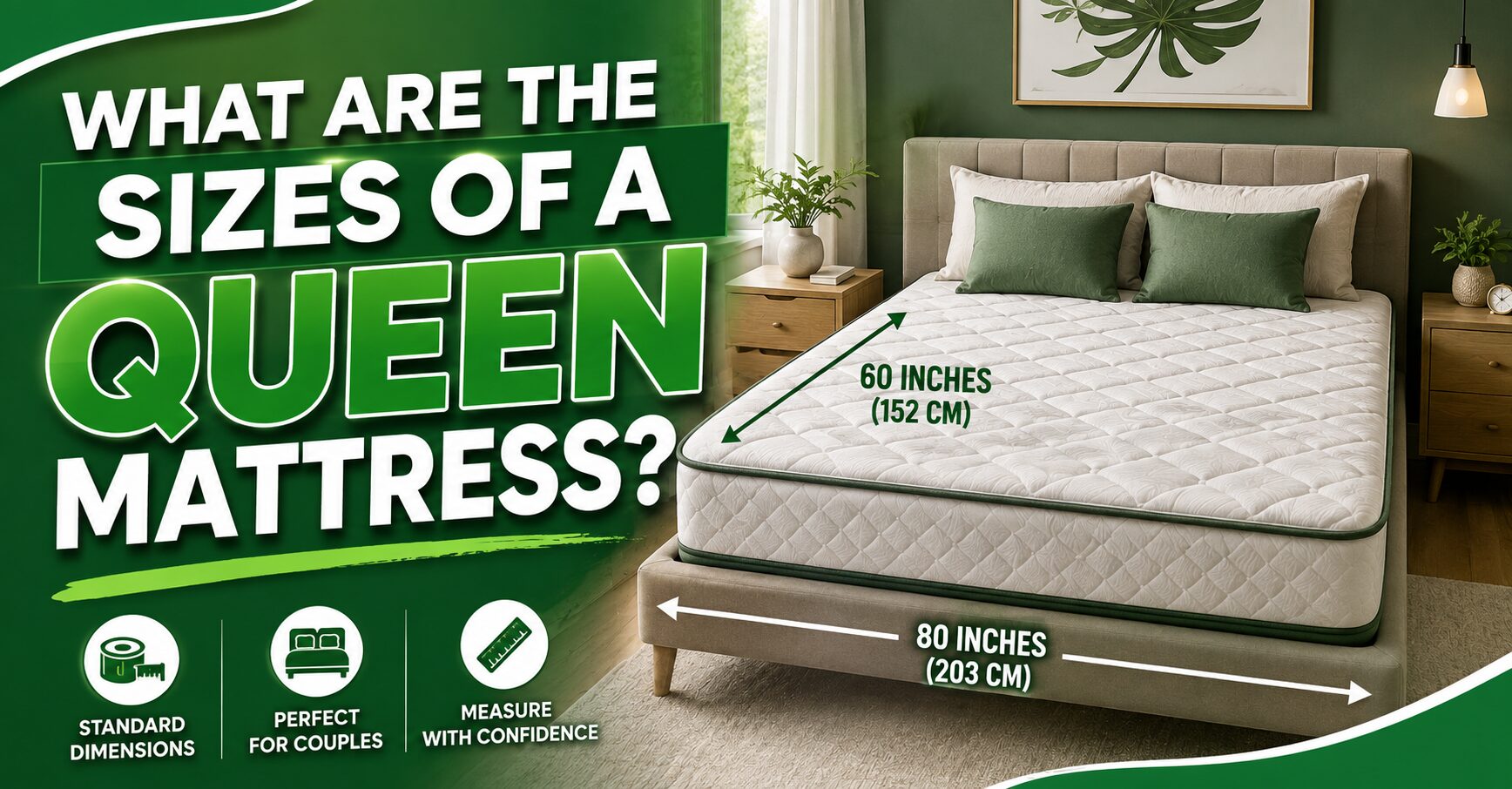
What are the dimensions of a queen size mattress? A standard queen measures 60 inches wide by 80 inches long (152 × 203 cm) the most popular bed size in the country, and the default pick for couples and solo sleepers who want extra stretch room without the bed taking over the room. If you’re furnishing a first apartment, upgrading from a double, or just trying to figure out whether your dresser and nightstands will still fit once the new bed’s in, you’re in the right place. Below, we’ll break down the exact dimensions of a queen size mattress in every unit that matters, compare queen against double and king, and walk through real room-layout numbers not just “leave some walking space” so you can shop with actual confidence instead of a tape measure and a guess.
What Are the Dimensions of a Queen Size Mattress, Exactly?
A standard queen size mattress is 60″ wide × 80″ long. Here’s that same measurement across the units you’ll actually run into while shopping:
- Inches: 60 × 80
- Centimeters: approximately 152 × 203
- Feet: approximately 5 × 6.67
That’s the U.S. standard, and it’s what you’ll get from virtually every American mattress brand. One thing worth knowing before you buy: queen isn’t a single global number. In India, for instance, a “queen” mattress commonly runs 60 × 78 inches two inches shorter than the U.S. version and some manufacturers offer a 66-inch-wide “Olympic queen” as a step up. If you’re buying bedding or a frame from a different market than your mattress, don’t assume the label means the same thing. Check the spec sheet, not just the size name.
You should also expect a small manufacturing tolerance usually about ±1 inch in either direction due to padding thickness and how the mattress compresses during production. It’s not something to worry about, but it explains why your tape measure might read 59.5″ instead of a clean 60″.
Queen Size Mattress Dimensions Chart
Here’s how a queen stacks up against the other common sizes, so you can see the jump at a glance:
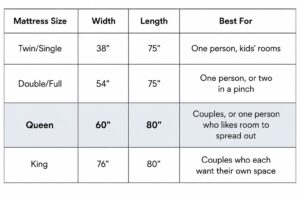
The jump from double to queen is bigger than it looks on paper 6 extra inches of width and 5 of length works out to roughly 89 square feet more sleeping surface, which is the difference between two people bumping elbows all night and actually sleeping through it.
How Big Is a Queen Mattress, Really?
On paper, 60 × 80 inches is abstract. In practice, it breaks down like this: a queen gives two adults about 30 inches of personal width each close to the width of a twin bed, per person. That’s enough for most couples to sleep without constantly waking each other up, though if one partner moves around a lot at night or you’re both over 200 lbs combined and want more buffer, that’s when people start looking at a king instead.
For a solo sleeper, a queen is genuinely generous you get the room to sprawl diagonally, keep a book and a water glass within reach, and still have space left over. It’s also why queens are the go-to for guest rooms: comfortable for a couple staying over, and not wasted space when it’s just for one.
How Much Bedroom Space Does a Queen Bed Need?
This is where most sizing guides stop short they’ll tell you “leave 24 inches on each side” and move on. But a bedroom isn’t just a mattress; it’s a mattress plus a frame, plus nightstands, plus somewhere to put your clothes. Here’s what that actually looks like in a real room.
Say you have an 11×12-foot bedroom (132 square feet a fairly typical primary bedroom size). Here’s how the math plays out:
- Queen mattress + frame footprint: roughly 62″ × 82″ (frames typically run 1–2 inches larger than the mattress on each side)
- That leaves about 4 feet of width and 3.7 feet of length as “extra” room
- Two 20″-wide nightstands eat into that width plan for about 20 inches on each side of the bed just for those
- A 60″-wide, 18″-deep dresser against the opposite wall still leaves comfortable walking space, as long as it’s not on the same wall as a closet door
Run the numbers before you buy, and you’ll know whether you’re picking nightstands or skipping them. A pair of slim 16″ nightstands instead of standard 20″ ones can be the difference between a room that breathes and one that feels like an obstacle course. If you’re furnishing from scratch, it’s worth shopping the bed frame and nightstands together rather than picking the mattress size in isolation and hoping the rest fits.
Quick sizing rule of thumb: take your room’s dimensions and subtract 6–7 feet total (roughly 3–3.5 feet per side) to find your realistic maximum mattress width for comfortable walking space. A 10×10 room technically fits a queen, but it’s tight 10×12 or larger is where a queen feels comfortable rather than crammed.
Queen vs Double Mattress Dimensions
A double (also called a full) is 54 × 75 inches 6 inches narrower and 5 inches shorter than a queen. For one person, a double mattress is fine. For two, it’s genuinely tight: each partner gets about 27 inches of width, which is less than a standard crib mattress. If you’re currently sleeping on a double as a couple and wondering whether the upgrade is worth it, the honest answer is almost always yes queen is the practical minimum for two adults sharing a bed comfortably.
Queen vs King Mattress Dimensions
A king is 76 × 80 inches 16 inches wider than a queen mattress, with the same length. That extra width translates to about 38 inches of personal space per person instead of 30. Kings are the better call if you have the room for one (plan on at least a 12×12 bedroom), if either of you is a restless sleeper, or if you occasionally have a kid or a dog joining the bed. The trade-off is real, though: king sheets, duvets, and mattress protectors typically cost 20–35% more than queen equivalents, and the bed itself needs meaningfully more clearance to maneuver through doorways and stairwells during delivery.
Queen Mattress Dimensions vs Queen Bed Frame Dimensions
Here’s a mix-up that trips up a lot of first-time buyers: the dimensions of a queen size mattress and a queen bed frame aren’t the same thing. A queen bed frame is built to hold a 60 × 80″ mattress, but the frame itself is usually 2–4 inches larger in each direction to accommodate the mattress edges and any bedding overhang. Add a headboard and footboard, and the frame’s total footprint can run several inches longer still.
Practically, that means when you’re measuring your room, measure for the frame, not just the mattress spec sheet otherwise you’ll order a bed that technically holds a queen mattress but doesn’t actually fit where you planned to put it. If you’re buying mattress and frame separately (say, keeping an old frame and upgrading the mattress, or vice versa), always cross-check both sets of dimensions before you order either one. This is also the moment to double-check whether your frame’s rail height works with your chosen mattress thickness a low-profile platform frame with an ultra-thick pillow-top mattress can look mismatched, with the mattress spilling over the rail edge.
How to Measure a Queen Mattress
If you want to double-check what you’re working with whether it’s a mattress you already own or a room you’re planning around the process is simple:
- Clear the bedding. Strip sheets and toppers so you’re measuring the actual mattress.
- Measure width side to side at the widest point.
- Measure length from head to foot.
- Measure thickness separately, since this affects sheet pocket depth and frame clearance, not the footprint.
- Measure your room the same way width and length of the actual floor space, then subtract door swing and closet clearance before deciding what fits.
- Compare both against the manufacturer’s listed specs, allowing for that ±1″ tolerance mentioned earlier.
Mattress Thickness and Bedding
Queen mattresses generally run 8 to 16 inches thick, depending on the number of comfort layers. Thicker isn’t automatically better it’s a comfort and support preference, not a quality signal, and it needs to match your frame’s rail height to look and function right.
Thickness also determines which sheets will actually stay on the bed. Standard fitted sheets fit mattresses up to about 11 inches thick; deep-pocket sheets handle 12–15 inches; extra-deep pocket sheets are for anything above that. If you’ve added a topper, count its thickness too a 12″ mattress with a 3″ topper needs deep-pocket sheets, not standard ones, or you’ll be re-tucking corners every morning.
Who Should Buy a Queen Size Mattress?
- Couples who want comfortable shared sleeping space without needing a 12×12+ bedroom
- Solo sleepers who like room to stretch out or just prefer a bigger bed
- Guest rooms, where it needs to work for one person most nights and two occasionally
- Anyone upgrading from a double who’s outgrown the space
- Medium-sized primary bedrooms roughly 10×12 feet and up
It’s a less obvious fit if you’re working with a genuinely small room (under 10×10) where a double would leave more breathing room, or if you and a partner both prefer a lot of personal space and have the square footage for a king.
Conclusion
The dimensions of a queen size mattress come down to 60 × 80 inches (152 × 203 cm) but the number on the spec sheet is only half the picture. What actually matters is how that footprint plays out in your specific room once you add a frame, nightstands, and somewhere for your clothes to live. Measure your space before you fall in love with a mattress, double-check frame dimensions separately from mattress dimensions, and size up to king only if you genuinely have the room and the reason to.
Ready to put the numbers to work? Browse our queen bed frames, or check our queen vs. king guide if you’re still deciding between the two and if you’re not sure your room measurements add up, our room-measuring guide walks through it step by step.
Frequently Asked Questions
What are the dimensions of a queen size mattress?
60 inches wide by 80 inches long (about 152 × 203 cm).
Is a queen mattress always 60 × 80 inches?
That’s the U.S. standard, but it’s not universal some markets, like India, commonly use 60 × 78″. Always check the manufacturer’s spec sheet rather than assuming by name.
Is a queen mattress big enough for two people?
Yes, for most couples it gives each person about 30 inches of width. If either partner is a restless sleeper or you’re both larger-framed, a king offers more buffer.
What size room is best for a queen bed?
A 10×10 room is the minimum, but 10×12- feet or larger gives you comfortable walking space plus room for a dresser and nightstands.
Is a queen bigger than a double?
Yes 6 inches wider and 5 inches longer, which adds up to significantly more usable sleeping surface.
What size sheets fit a queen mattress?
Standard queen sheets fit mattresses up to about 11″ thick; go deep-pocket for anything thicker, and always account for a mattress topper if you use one.

Leave A Comment
You must be logged in to post a comment.