How Long Is a Single Bed?
How Long Is a Single Bed? This is one of the most common questions people ask when buying a bed for a child, teenager, or compact bedroom. Knowing the exact length helps you choose the right mattress, ensure proper comfort, and make the best use of your room space. A standard single bed is designed to suit one sleeper, but its length can vary slightly depending on the country and manufacturer. In this guide, we’ll explain how long is a single bed, provide measurements in both cm and inches, and help you decide whether it’s the right size for your needs.
Standard Single Bed Dimensions
Understanding the standard size is the first step before buying any bed. In Australia, mattress sizes follow a standard measurement system, which makes it easier to compare products.
A single bed is designed for one person and is commonly used in children’s bedrooms, guest rooms, and smaller apartments. While designs and frames may vary slightly, the mattress size itself follows a consistent standard.
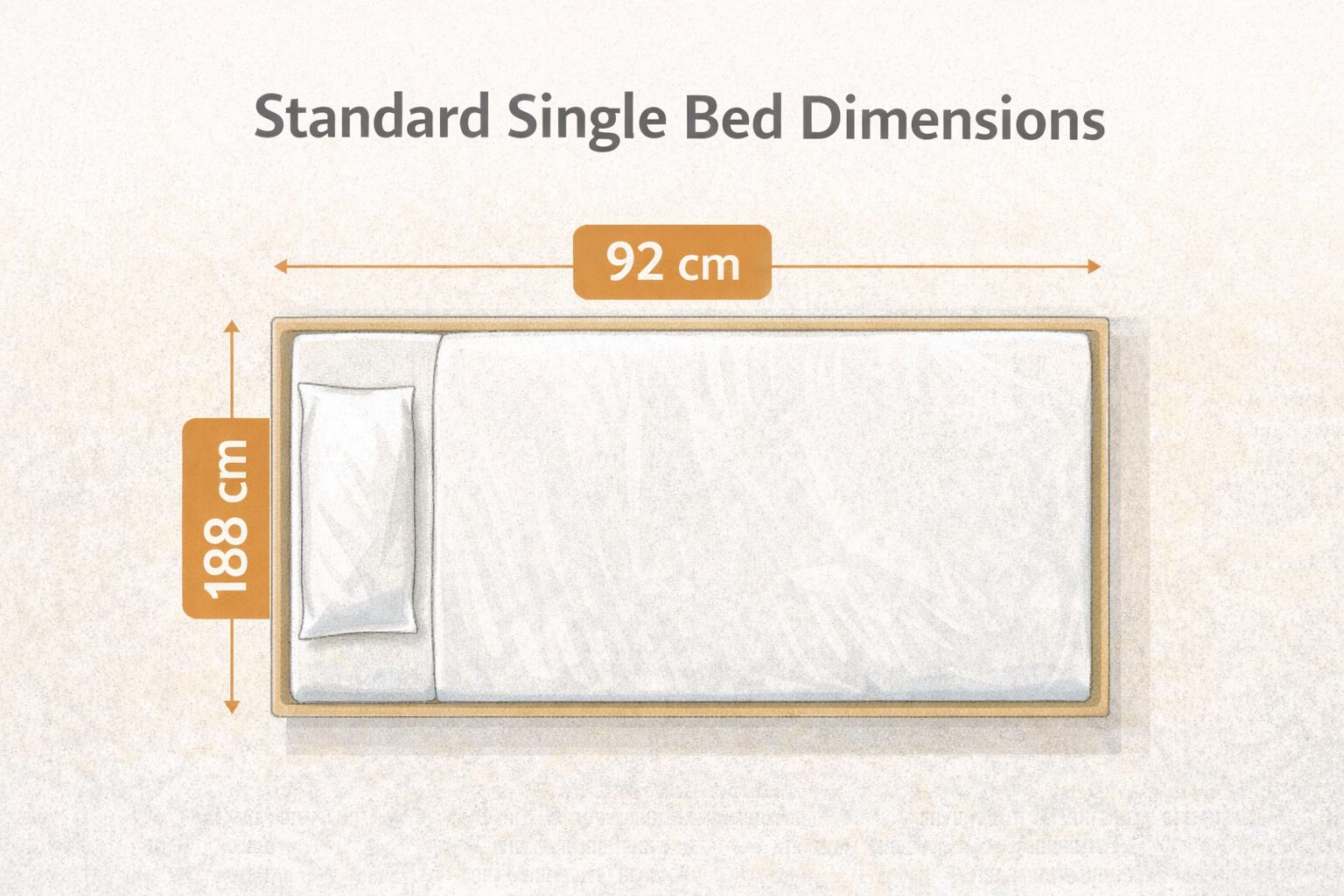
In Australia, a standard single bed measures:
-
Length: 188 cm
-
Width: 92 cm
In inches, this equals approximately:
-
Length: 74 inches
-
Width: 36 inches
These dimensions apply to the mattress itself. Bed frames may be slightly larger depending on design, headboard size, and material.
Knowing these exact measurements helps you plan room space, select bedding correctly, and ensure the bed suits the sleeper’s height.
How Long Is a Single Bed?
In Australia, the standard answer to how long a single bed is is:
188 cm long (approximately 74 inches).
This length is suitable for most children, teenagers, and many adults of average height. However, it may feel short for taller adults.
Here’s a simple rule:
A bed should ideally be at least 10–15 cm longer than the sleeper’s height.
For example:
-
If someone is 170 cm tall, a 188 cm bed provides comfortable space.
-
If someone is 185 cm tall, the bed may feel slightly tight.
If the sleeper is taller than 180 cm, you may want to consider a king single bed, which is longer.
The 188 cm length is consistent across most Australian retailers, so you can confidently use this measurement when planning your purchase.
How Wide Is a Single Bed?
While length is important, width also matters for comfort.
In Australia, a standard single bed is:
92 cm wide (approximately 36 inches).
This width provides enough space for one person to sleep comfortably without feeling cramped.
It is ideal for:
-
Children
-
Teenagers
-
Guest rooms
-
Small bedrooms
-
Bunk beds
However, for adults who move a lot during sleep, 92 cm may feel narrow. In that case, upgrading to a king single or double bed may provide better comfort.
It is also important to remember that the bed frame may add extra width. For example:
-
A wooden frame may add 2–5 cm on each side.
-
Upholstered frames may add even more.
Always measure the full frame size if space is limited.
Single Bed Size in CM and Inches
When shopping online or comparing products, you may see measurements listed in centimetres or inches. Understanding both helps avoid confusion.
Here is the standard Australian single bed size:
| Measurement Type | Length | Width |
|---|---|---|
| Centimetres (cm) | 188 cm | 92 cm |
| Inches (in) | 74 in | 36 in |
This is sometimes referred to as:
-
Standard single bed size
-
Australian single mattress size
-
Single mattress dimensions
Make sure not to confuse Australian single beds with US “Twin” beds. While they are similar, some slight variations may exist depending on manufacturer.
For quick reference:
-
188 cm = 1.88 metres
-
92 cm = just under 1 metre wide
This makes the single bed a compact and practical choice for smaller rooms.
Single Bed vs King Single: What’s the Difference?
Many people researching how long is a single bed also compare it with a king single. At first glance, they may look similar, but there are important differences in both length and width.
In Australia:
Single Bed
-
188 cm long
-
92 cm wide
King Single Bed
-
203 cm long
-
107 cm wide
This means a king single is:
-
15 cm longer
-
15 cm wider
Length Comparison
The biggest advantage of a king single is the extra length. At 203 cm, it is much more suitable for taller teenagers and adults.
If someone is over 180 cm tall, a standard single bed (188 cm) may feel too short. The extra 15 cm makes a noticeable difference in comfort.
Width Comparison
A king single also offers more sleeping space from side to side. At 107 cm wide, it provides more room to move during sleep.
This is helpful for:
-
Teenagers who are growing quickly
-
Adults who prefer more space
-
Restless sleepers
Who Should Choose Each?
A standard single bed is best for:
-
Young children
-
Smaller bedrooms
-
Bunk beds
-
Guest rooms
A king single bed is better for:
-
Teenagers
-
Taller adults
-
Long-term sleeping comfort
-
Rooms with extra space
If budget and room size allow, many families choose a king single for teenagers to avoid upgrading again later.
Is a Single Bed Suitable for Adults?
This is one of the most common follow-up questions after asking how long is a single bed.
The answer depends mainly on height and sleeping habits.
Height Considerations
Since a standard single bed is 188 cm long, it works well for adults up to about 175–178 cm tall. Taller adults may find their feet reaching the end of the mattress.
A general comfort guideline:
-
Bed length should be at least 10–15 cm longer than your height.
If you are 170 cm tall, a single bed provides comfortable extra space.
If you are 185 cm tall, it may feel restrictive.
Width and Sleeping Comfort
The 92 cm width is enough for one adult, but it can feel narrow if you move around a lot during sleep.
For:
-
Studio apartments
-
Small guest rooms
-
Budget living arrangements
A single bed can work for adults.
However, for everyday long-term comfort, many adults prefer a king single or double bed.
Single Bed for Kids and Teenagers
Single beds are one of the most popular choices for children’s bedrooms in Australia.
Ideal Age Range
Single beds are suitable for:
-
Toddlers transitioning from a cot
-
Primary school children
-
Early teenagers
The 188 cm length allows children to grow comfortably for many years.
When Should You Upgrade?
Parents often upgrade from a single to a king single or double when:
-
A child enters their mid-to-late teenage years
-
They grow taller than 175 cm
-
They need more sleeping space
If you want to avoid upgrading twice, choosing a king single early can be a smart long-term investment.
Room Size Considerations
Single beds are ideal for small bedrooms. Standard Australian bedroom layouts often allow:
-
Study desk
-
Wardrobe
-
Play space
All while fitting a single bed comfortably.
This makes them practical for family homes with multiple children.
Single Bed Frame vs Single Mattress Size
When people ask how long is a single bed, they are usually referring to the mattress size. However, it is important to understand that the bed frame is often slightly larger than the mattress itself.
In Australia, a standard single mattress measures:
-
188 cm long
-
92 cm wide
But once you add a frame, the overall dimensions can increase.
Why Is the Frame Bigger?
Most bed frames include:
-
Side panels
-
Headboard
-
Footboard
-
Decorative edges
These elements add extra centimetres to the total length and width.
For example:
-
A simple platform frame may add 3–5 cm on each side.
-
A larger upholstered frame could add 8–12 cm.
-
A thick headboard may extend total length beyond 200 cm.
This means the full bed setup may measure closer to:
-
195–205 cm long (depending on design)
If your bedroom is small, always check the full frame dimensions, not just the mattress size.
Safety Considerations for Children
When choosing a bed frame for children, safety should be a priority. The frame should be sturdy, stable, and free from sharp edges. Guard rails may be necessary for younger children transitioning from a cot.
It’s also important to consider furniture safety standards in Australia when choosing bed frames for children.
Ensuring the bed meets local safety expectations helps reduce risks and provides peace of mind for parents.
Before purchasing, always confirm:
-
Frame height
-
Weight capacity
-
Secure assembly
-
Mattress fit inside the frame
Choosing the correct frame size and ensuring safety compliance will help you make a practical and long-lasting decision.
How to Measure a Single Bed Properly
Measuring correctly helps avoid buying the wrong size or struggling with space limitations.
Step 1: Measure the Mattress
Use a measuring tape to check:
-
Length from top to bottom
-
Width from side to side
-
Thickness (height of mattress)
The standard should read approximately:
-
188 cm (length)
-
92 cm (width)
If it differs significantly, it may not be a standard Australian single.
Step 2: Measure the Bed Frame
If the bed is already assembled:
-
Measure the full outer length
-
Measure the full outer width
-
Include the headboard in total length
This ensures accurate room planning.
Step 3: Measure the Room Space
Before buying a new bed:
-
Measure wall-to-wall distance
-
Leave at least 60 cm walking space beside the bed
-
Check door clearance
-
Consider wardrobe opening space
Proper measuring prevents overcrowding and improves bedroom layout.
Common Mistakes When Buying a Single Bed
Even though single beds seem simple, buyers often make avoidable mistakes.
1. Confusing Single with Twin
In Australia, “single” is the standard term. In the US, “twin” is used. While they are similar in size, small differences may exist depending on manufacturer.
Always confirm measurements before purchasing internationally.
2. Ignoring Sleeper Height
Many people only think about width and forget about length. If the sleeper is tall, a single bed may feel too short.
Always compare bed length with the sleeper’s height.
3. Forgetting Mattress Thickness
Some mattresses are thicker than others. A very thick mattress may increase bed height, which can affect:
-
Bunk bed safety
-
Guard rail clearance
-
Child accessibility
4. Not Planning for Growth
For growing children, buying a single bed may mean upgrading in a few years. If the child is already tall, a king single may be more practical long-term.
Conclusion
So, how long is a single bed? In Australia, the standard single bed measures 188 cm in length and 92 cm in width. This size is ideal for children, teenagers, guest rooms, and compact spaces.
While it can suit some adults, taller sleepers may find it slightly short. Comparing it with a king single helps determine whether extra length is needed.
Before purchasing, always measure your room, check full frame dimensions, and consider the sleeper’s height. Choosing the right bed size ensures comfort, practicality, and better use of space.
With the right measurements and planning, a single bed can be a smart and versatile choice for many Australian homes.
FAQs About Single Bed Length
Is a single bed 190 cm long?
In Australia, the standard single bed length is 188 cm, not 190 cm. Some brands may round measurements, but 188 cm is the official standard.
Is a single bed the same as a twin?
In many cases, yes. A US twin bed is similar in size to an Australian single bed. However, always check exact dimensions before purchasing overseas products.
Can a tall adult sleep in a single bed?
If the adult is under about 175–178 cm tall, a single bed may be comfortable. Taller adults may prefer a king single for extra length.
What room size fits a single bed?
A single bed fits comfortably in smaller bedrooms. Ideally, allow:
-
At least 2.5 m x 2.5 m room size
This provides space for movement and furniture.

Leave A Comment
You must be logged in to post a comment.