How to Choose the Right TV Unit for Your Home
How to choose the right TV unit for your home is a common question when setting up or upgrading a living space. A TV unit is more than just a stand for your television—it plays an important role in organizing your room, enhancing décor, and improving viewing comfort. Choosing the wrong size, style, or material can make your space feel cluttered or unbalanced. From measuring your TV and room size to selecting the right storage options, several factors need careful consideration. In this guide, you’ll learn how to choose the right TV unit for your home based on layout, functionality, and interior style preferences.
Why the Right TV Unit Matters
A TV unit may seem like a simple piece of furniture, but it plays a very important role in your living room. It is not just a place to keep your television. It also affects the overall look, comfort, and organization of your space.
First, the right TV unit helps improve room layout. If the unit is too large, it can make the room feel crowded. If it is too small, it may look unbalanced or out of place. Choosing the right size helps create a neat and well-proportioned living area.
Second, a TV unit enhances your décor. Whether your style is modern, traditional, or minimalist, the design of your TV unit can tie the room together. It can act as a focal point and add character to your space.
Finally, a good TV unit provides useful storage. It can hold media devices, gaming consoles, remotes, and other accessories. Some units also offer cable management features to keep wires hidden and organized. This keeps your room tidy and clutter-free.
Measure Your Space and TV Size First
Before buying a TV unit, it is important to measure both your room and your television. Skipping this step can lead to size problems and poor placement.
TV Screen Size and Viewing Distance
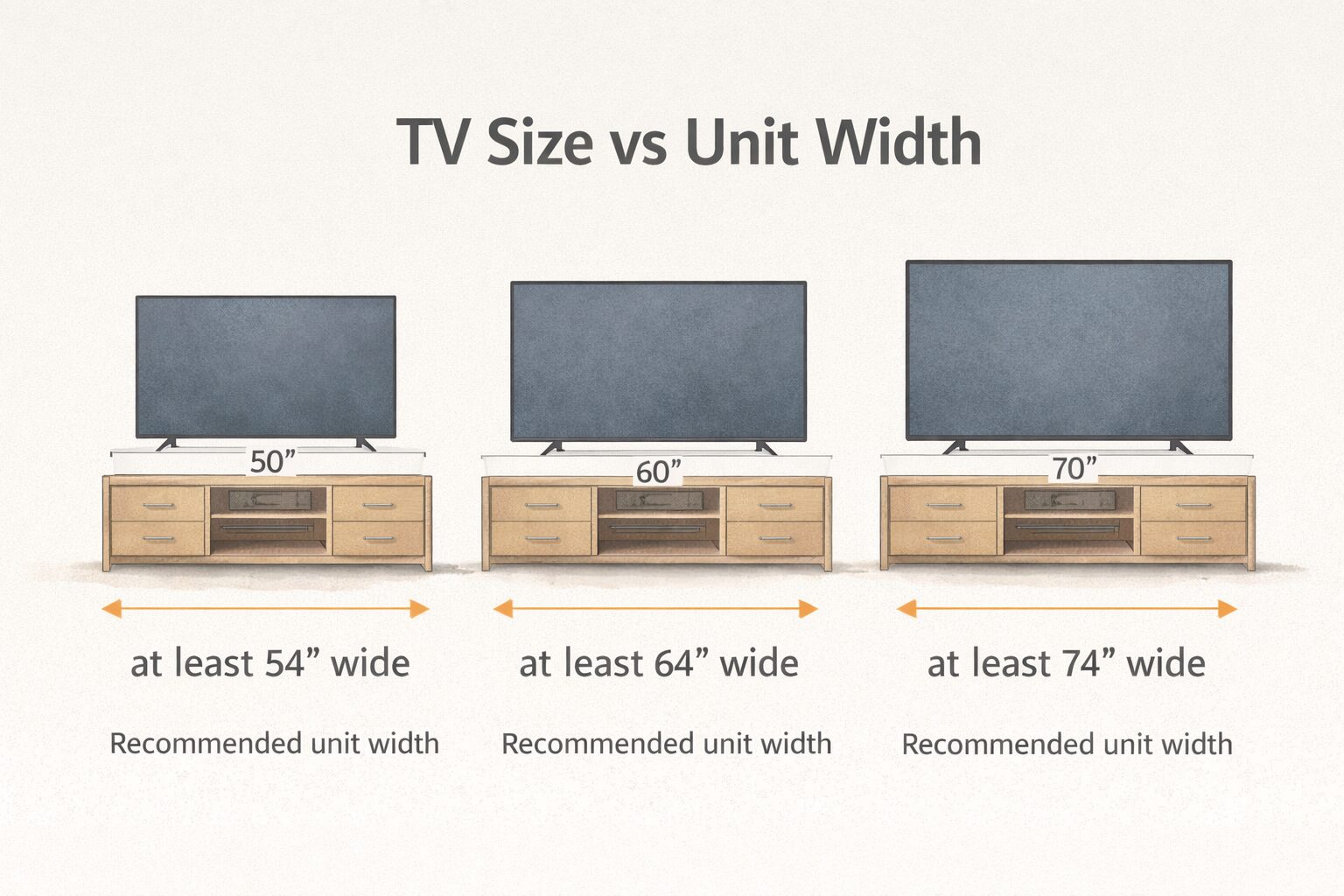
Start by measuring your TV screen size. Your TV unit should always be wider than the television. This creates balance and prevents the TV from looking oversized on the stand.
As a general rule, the unit should be at least a few inches wider on each side of the TV. This improves safety and appearance.
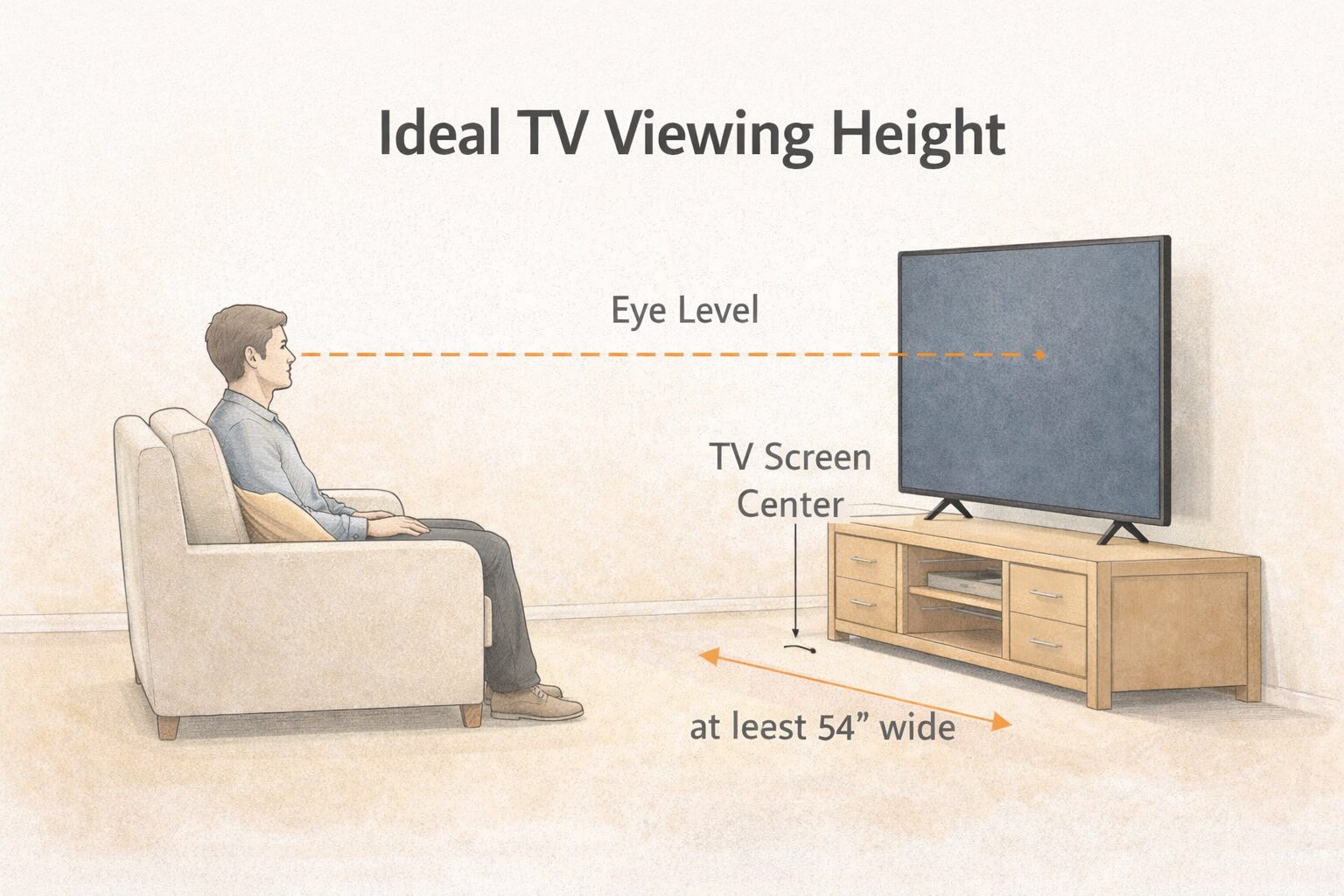
Viewing distance also matters. Larger TVs require more distance between the screen and seating area for comfortable viewing. If the unit is too high or too low, it can cause neck strain. Ideally, the center of the TV screen should be at eye level when you are seated.
Room Dimensions and Layout
Next, measure the available wall space where you plan to place the TV unit. Consider walking space, doorways, and windows. The unit should not block movement or make the room feel cramped.
Decide whether you prefer a wall-mounted TV unit or a floor-standing one. Wall-mounted units are great for small rooms because they save floor space. Floor units offer more storage and stability.
Always leave enough space around the unit for ventilation and easy cleaning.
Types of TV Units
There are several types of TV units available, and each one suits different needs and room sizes.
TV Stands
TV stands are simple and compact. They usually have a flat surface for the television and a few shelves underneath for media devices.
They are ideal for small to medium-sized living rooms and are easy to move or reposition.
Entertainment Centers
Entertainment centers are larger units designed to provide maximum storage. They often include shelves, cabinets, and sometimes display sections.
These units are perfect for large living rooms where you want to create a complete entertainment setup.
Wall-Mounted TV Units
Wall-mounted units are modern and space-saving. They attach directly to the wall and often include floating shelves or cabinets.
They give a clean and minimalist look and are ideal for contemporary homes.
Corner TV Units
Corner TV units are designed to fit neatly into unused corners. They are perfect for small rooms or apartments where space is limited.
They help maximize room space while still providing storage and support.
Choosing the Right Material
The material of your TV unit affects its durability, appearance, and price. Choosing the right material ensures that your unit lasts long and matches your interior style.
Solid Wood
Solid wood TV units are strong and durable. They offer a classic and timeless look that works well in traditional or rustic homes.
Wood units are long-lasting but can be more expensive. They are also heavier, so they may not be easy to move once placed.
Engineered Wood
Engineered wood, such as MDF or particleboard, is a budget-friendly option. It is lightweight and available in many finishes.
While it may not be as durable as solid wood, it works well for modern homes and smaller budgets. Many engineered wood units come with stylish laminates that mimic natural wood.
Metal and Glass
Metal and glass TV units are popular in contemporary and minimalist homes. They create a sleek and modern appearance.
Glass units can make small rooms feel more open, but they may require more cleaning to remove fingerprints and dust. Metal frames add strength and an industrial feel.
Choosing the right material depends on your budget, design preference, and how much durability you need.
Storage and Functionality
A TV unit should not only hold your television but also provide practical storage solutions. Before buying, think about what items you need to store.
Open Shelving
Open shelves allow easy access to devices like gaming consoles, DVD players, and streaming boxes. They are convenient and make it easy to operate remote controls.
However, open shelves may collect dust more quickly and can make the unit look cluttered if not organized properly.
Closed Cabinets
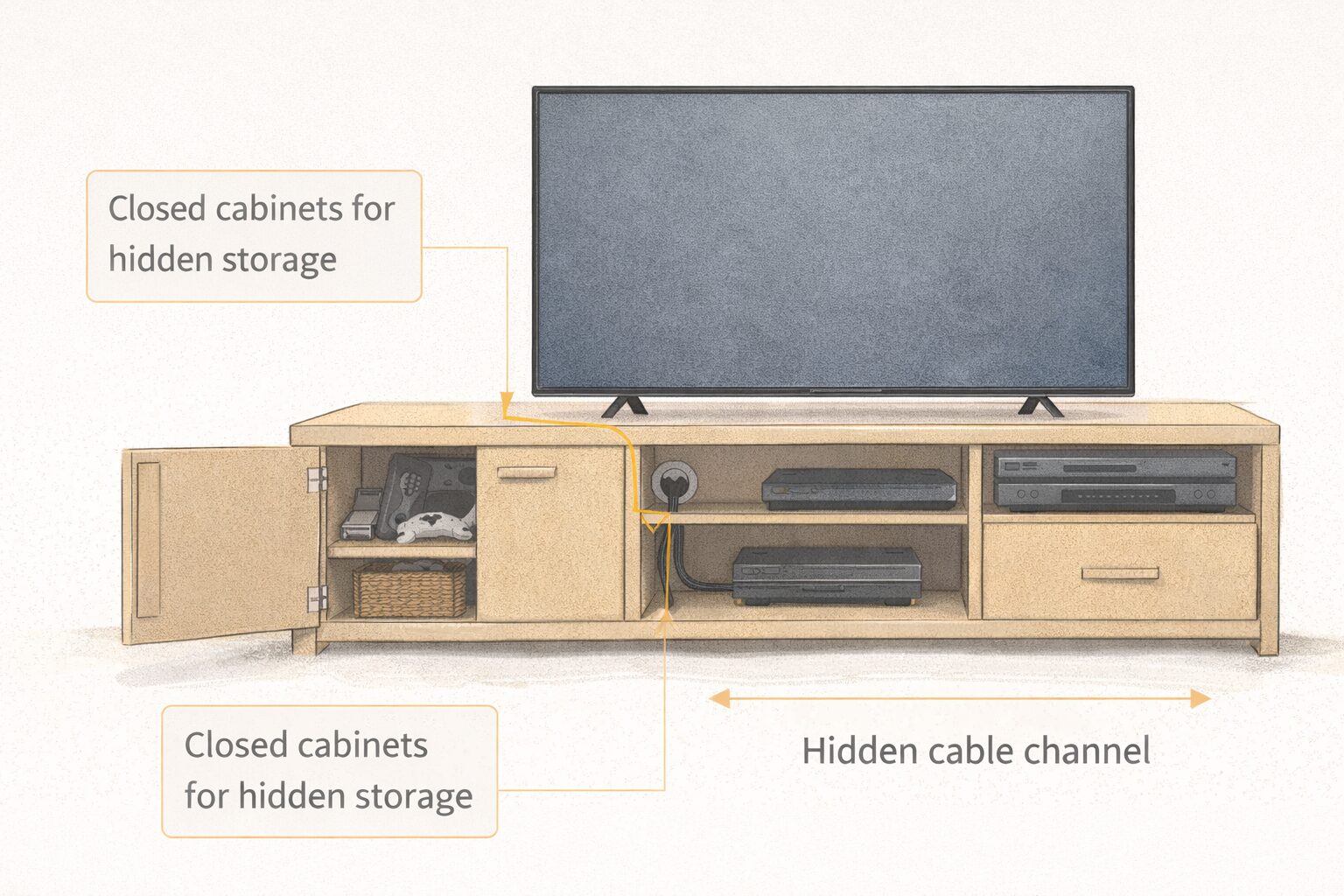
Closed cabinets help hide clutter and keep your living room looking neat. They are perfect for storing remotes, cables, and other accessories.
Cabinets also protect devices from dust and damage.
Cable Management Features
Many modern TV units include built-in cable management holes or panels. These features help organize wires and prevent messy cable tangles.
Good cable management improves safety and gives your setup a clean, professional look.
Matching the TV Unit to Your Interior Style
Your TV unit should complement the overall design of your living room. A mismatched piece can disrupt the harmony of the space.
Modern Living Rooms
For modern homes, choose sleek designs with clean lines and neutral colors. Gloss finishes or minimalist floating units work well.
Minimalist Homes
Minimalist interiors require simple and functional TV units. Look for units with hidden storage and minimal decorative details.
Traditional Interiors
Traditional spaces pair well with wooden TV units that feature detailed craftsmanship and warm tones.
Industrial Style
Industrial-style homes often use metal frames combined with wood. Dark finishes and raw textures fit perfectly in these spaces.
Choosing a TV unit that matches your décor creates a balanced and attractive living room.
Read More: How to Choose the Perfect Pillow
Height and Viewing Comfort
Comfort is one of the most important factors when choosing a TV unit. Even the most stylish unit will not feel right if the TV is positioned too high or too low.
The center of your TV screen should be at eye level when you are sitting on your sofa. This prevents neck strain and allows you to watch comfortably for longer periods.
Most sofas have a seating height of around 40–45 cm. Based on this, standard TV units are usually between 45–60 cm high. However, the right height depends on your TV size and seating arrangement.
If you plan to mount the TV on the wall above the unit, make sure it is not placed too high. Watching a TV that is positioned too high can cause discomfort over time.
Taking time to measure seating height and viewing angle helps create a comfortable and enjoyable entertainment setup.
TV Unit for Small vs Large Rooms
Your room size plays a big role in choosing the right TV unit.
Small Living Rooms
In smaller spaces, choose compact and slim TV units. Wall-mounted or floating units work well because they save floor space and create a more open feel.
Corner TV units are also a smart choice for small rooms. They make use of unused space and help improve layout efficiency.
Avoid bulky entertainment centers in small rooms, as they can make the space feel crowded.
Large Living Rooms
In larger rooms, you have more flexibility. You can choose larger TV units or even full entertainment walls with additional storage and display sections.
Statement units with shelves, cabinets, and decorative panels can help fill empty wall space and create a balanced look.
The key is to match the scale of the TV unit with the size of the room.
Common Mistakes to Avoid
Choosing a TV unit may seem simple, but many homeowners make avoidable mistakes.
One common mistake is buying a unit that is too small for the TV. Always ensure the unit is wider than the television for stability and visual balance.
Another mistake is ignoring storage needs. If you have multiple devices, gaming consoles, or accessories, make sure the unit has enough shelves or cabinets.
Overlooking ventilation is another issue. Electronic devices generate heat, so your unit should allow proper airflow.
Lastly, failing to measure your room properly can result in poor placement and limited walking space.
Avoiding these mistakes helps you make a smarter purchase.
Conclusion
Learning how to choose the right TV unit for your home helps you create a comfortable, stylish, and organized living space. The right unit improves viewing comfort, enhances your décor, and provides practical storage.
By measuring your TV and room size, selecting the correct material, considering storage needs, and matching the unit to your interior style, you can make a smart and long-lasting choice.
Take time to plan carefully, avoid common mistakes, and choose a TV unit that balances both function and design for your home.
FAQs About Choosing a TV Unit
What size TV unit should I buy?
Your TV unit should be at least a few inches wider than your television. It should also fit comfortably within your available wall space.
Should a TV unit be wider than the TV?
Yes, a wider unit improves stability and creates better visual balance in the room.
Is wall-mounted better than a floor unit?
It depends on your space. Wall-mounted units save space and look modern, while floor units provide more storage.
How high should a TV unit be?
The TV screen center should align with your eye level when seated. Most units range between 45–60 cm in height.



Leave A Comment
You must be logged in to post a comment.