How to Clean a Leather Sofa
How to clean a leather sofa is a common question for homeowners who want to keep their furniture looking stylish and long-lasting. Leather sofas add elegance to any living space, but without proper care, they can quickly collect dust, stains, and lose their natural shine. Using the wrong cleaning products or techniques can even cause cracking or fading. That’s why it’s important to clean leather the right way. In this guide, you’ll learn safe, step-by-step methods to clean a leather sofa at home, remove common stains, and protect the surface so your sofa stays soft, clean, and beautiful for years to come.
Types of Leather Sofas (Why It Matters Before Cleaning)
Before learning how to clean a leather sofa, it’s important to understand that not all leather is the same. Different types of leather react differently to water, cleaners, and conditioning products. Cleaning without knowing the leather type can lead to discoloration, stains, or permanent damage.
Aniline leather is the most natural and soft type. It absorbs liquids easily and stains quickly, so it needs very gentle cleaning and minimal moisture.
Semi-aniline leather has a light protective coating, making it slightly more resistant to stains while still feeling soft.
Pigmented or protected leather is the most common type used in homes. It has a strong protective layer and is easier to clean and maintain.
Faux or PU leather is synthetic and more water-resistant, but it can crack if harsh cleaners are used.
Knowing your leather type helps you choose the safest cleaning method.
Things You Need to Clean a Leather Sofa
Cleaning a leather sofa does not require expensive tools, but using the right items is essential to avoid damage. Most supplies are simple and easy to find.
You will need soft microfiber cloths for wiping and drying, as rough fabrics can scratch the leather surface. A vacuum cleaner with a soft brush attachment helps remove dust and crumbs from seams and corners.
For cleaning, use warm water mixed with a small amount of mild soap or a cleaner specifically made for leather. Avoid strong detergents, alcohol, bleach, or ammonia, as these can dry out and damage leather.
Optional but helpful items include a leather conditioner to restore softness and protect the surface after cleaning. Always test any product on a hidden area first.
How to Clean a Leather Sofa (Step-by-Step)
Cleaning a leather sofa properly involves gentle steps that protect the material while removing dirt and stains. Rushing or scrubbing too hard can harm the leather.
Remove Dust and Loose Dirt
Start by vacuuming the sofa using a soft brush attachment. Focus on seams, crevices, and corners where dust and crumbs often collect. Removing dry dirt first prevents scratching during wiping.
Prepare a Gentle Cleaning Solution
Mix warm water with a few drops of mild soap. The solution should be lightly soapy, not foamy. You can also use a leather-specific cleaner if available.
Clean the Leather Surface
Dip a microfiber cloth into the solution, wring it well, and gently wipe the sofa in small sections. Use light pressure and avoid soaking the leather. Work evenly across the surface.
Dry the Sofa Properly
Use a dry microfiber cloth to remove excess moisture. Let the sofa air dry naturally, away from direct sunlight or heat sources.

How to Remove Stains from a Leather Sofa
Stains on a leather sofa should be treated as soon as possible. The longer a stain sits, the harder it becomes to remove. Always blot gently and avoid rubbing, which can spread the stain or damage the leather surface.
For food and drink stains, use a clean, dry cloth to blot the spill immediately. If the stain remains, lightly wipe the area with a damp microfiber cloth and mild soap solution. Avoid soaking the leather.
For grease and oil stains, do not use water. Sprinkle a small amount of baking soda or cornstarch on the stain and let it sit for a few hours to absorb the oil. Wipe it away gently with a soft cloth.
For ink or dye stains, use extreme caution. Lightly dab the area with a cloth slightly dampened with a leather cleaner. If the stain doesn’t lift quickly, stop and consider professional cleaning to avoid permanent damage.
How to Condition and Protect a Leather Sofa
Conditioning is an important step that many people skip, but it helps keep leather soft, flexible, and protected. Cleaning removes dirt, while conditioning restores moisture lost over time.
Use a leather conditioner designed for your sofa type. Apply a small amount to a clean microfiber cloth and gently rub it into the leather using circular motions. Work in small sections to ensure even coverage.
Allow the conditioner to absorb for the recommended time, then buff lightly with a dry cloth. Conditioning should be done every 3 to 6 months, depending on use and climate.
Regular conditioning prevents cracking, fading, and stiffness, helping your leather sofa maintain its appearance and comfort for years.
Common Mistakes to Avoid When Cleaning Leather Sofas
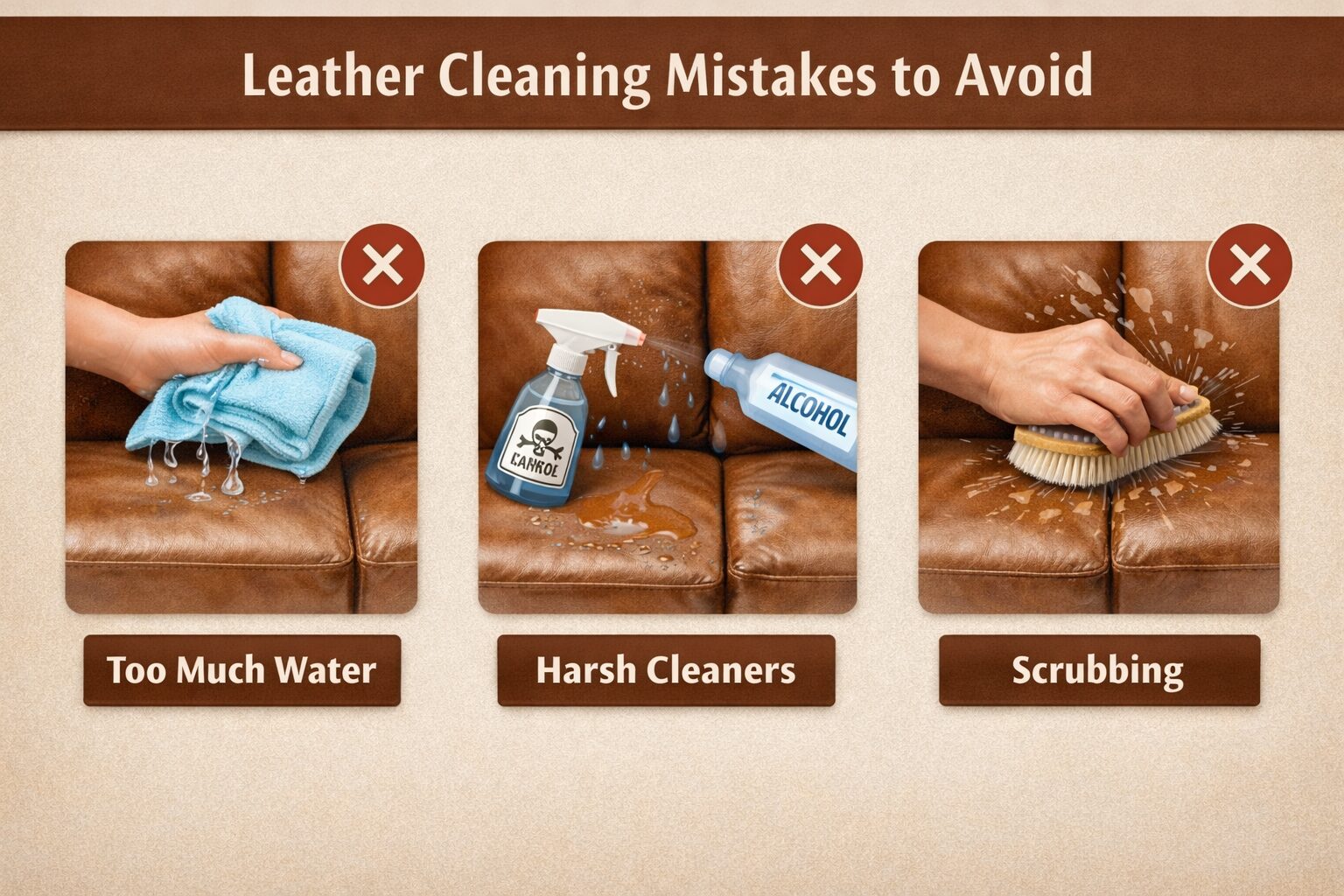
One of the biggest mistakes people make is using too much water. Excess moisture can soak into leather, causing stains, warping, or mold growth. Always use a damp, not wet, cloth.
Another common mistake is using household cleaners like glass cleaner, bleach, or alcohol. These chemicals strip natural oils from leather and can cause cracking or discoloration.
Scrubbing too hard, skipping patch tests, and drying leather with heat sources like hair dryers are also harmful. Gentle cleaning and patience are key to safe leather care.
Avoiding these mistakes will help extend the life of your leather sofa and keep it looking its best.
How Often Should You Clean a Leather Sofa?
Knowing how often to clean a leather sofa helps maintain its look and prevent long-term damage. Leather does not need frequent deep cleaning, but regular light care makes a big difference.
For everyday maintenance, dust and wipe the sofa weekly using a dry or slightly damp microfiber cloth. This removes surface dust and prevents buildup.
A monthly light cleaning with a mild soap solution helps remove body oils and light stains. Deep cleaning and conditioning should be done every 3 to 6 months, depending on usage, pets, and climate conditions.
Spills should always be cleaned immediately to prevent stains from setting into the leather.
Tips to Keep Your Leather Sofa Clean Longer
Simple habits can help keep your leather sofa clean and reduce the need for frequent deep cleaning. Start by placing the sofa away from direct sunlight, which can cause fading and drying.
Use arm covers or throws on high-use areas to protect against sweat and oils. Clean spills as soon as they happen using a soft cloth.
If you have pets, regularly brush them to reduce hair and oils transferring to the sofa. Avoid sitting on the sofa with wet clothes, and keep sharp objects away to prevent scratches.
These small steps help preserve the leather’s natural look and feel.
Also Read: How to clean a Fabric Sofa?
DIY vs Professional Leather Sofa Cleaning
DIY cleaning works well for regular maintenance and light stains. It is cost-effective and easy when done carefully with the right products.
Professional cleaning is recommended for deep stains, strong odors, or delicate leather types like aniline leather. Professionals use specialized products and techniques that reduce the risk of damage.
If you’re unsure about a stain or notice cracking or discoloration, professional cleaning is the safer option. Combining regular DIY care with occasional professional cleaning keeps your leather sofa in excellent condition.
Conclusion
Learning how to clean a leather sofa the right way helps protect your investment and keeps your furniture looking beautiful for years. Regular dusting, gentle cleaning, and proper conditioning prevent stains, cracks, and fading.
By using the correct products, avoiding harsh chemicals, and cleaning spills promptly, you can maintain the softness and shine of your leather sofa with ease. Whether you choose DIY cleaning or professional care, consistent maintenance is the key to extending the life and comfort of your leather sofa.
FAQs
Many people have questions when learning how to clean a leather sofa safely. Here are clear answers to some of the most common concerns.
Can I clean a leather sofa with water?
Yes, but only in small amounts. Always use a damp cloth, not a wet one. Too much water can soak into the leather and cause damage.
Can vinegar be used on leather?
Vinegar is generally not recommended for leather sofas. It can dry out the leather and remove natural oils, leading to cracking over time.
How do I remove bad odor from a leather sofa?
Wipe the sofa with a mild soap solution and allow it to air out. Using baking soda nearby (not directly on the leather) can help absorb odors.
Are baby wipes safe for leather sofas?
Most baby wipes contain chemicals that can harm leather. It’s best to avoid them and use products designed for leather cleaning instead.



Leave A Comment
You must be logged in to post a comment.