How to Choose the Perfect Pillow
How to choose the perfect pillow is a question many people ask when they struggle with neck pain, poor sleep, or constant tossing and turning. The right pillow plays a major role in supporting your head, neck, and spine, helping you wake up refreshed instead of sore. With so many pillow types, materials, firmness levels, and loft options available, choosing the best one can feel overwhelming. Whether you’re a side, back, or stomach sleeper, understanding what to look for makes all the difference. In this guide, you’ll learn how to choose the perfect pillow based on your sleep position, comfort needs, and personal preferences.
Why Choosing the Right Pillow Is Important
Many people focus on buying a good mattress but forget that a pillow is just as important. Your pillow supports your head, neck, and upper spine for 6–8 hours every night. If it doesn’t provide the right support, you may wake up with neck pain, headaches, or shoulder stiffness.
The main job of a pillow is to keep your spine aligned while you sleep. When your head is too high or too low, your neck bends unnaturally. Over time, this can lead to muscle strain and poor sleep quality.
A good pillow also improves overall comfort. It reduces pressure points, supports natural posture, and helps you stay in a relaxed position throughout the night. Choosing the right pillow can improve sleep quality, reduce body aches, and help you wake up feeling refreshed instead of tired.
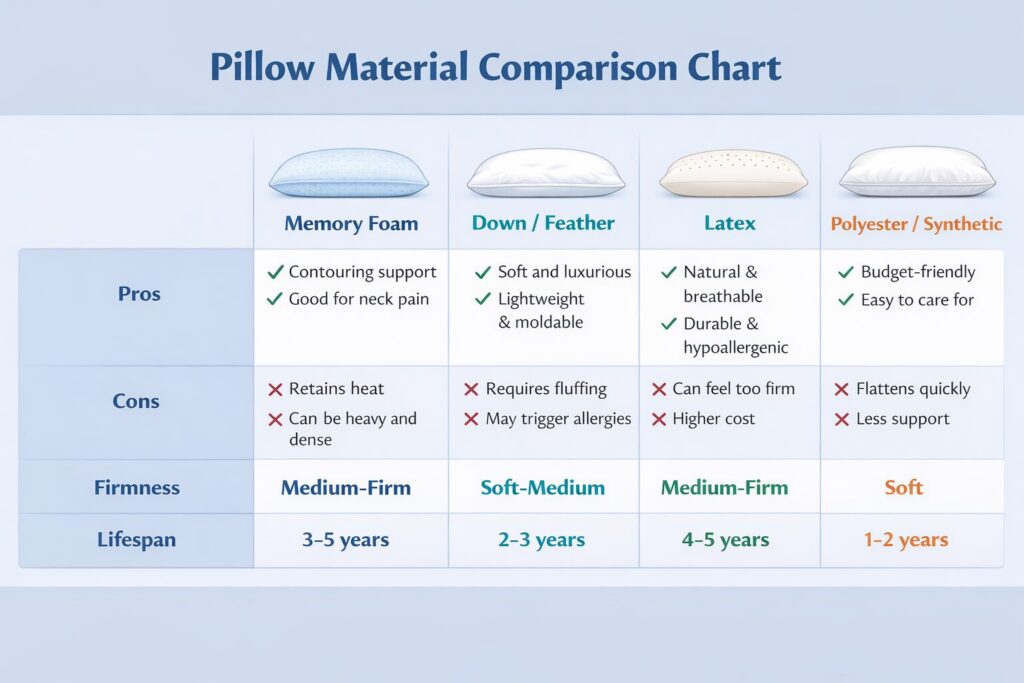
Types of Pillows Based on Filling Material
The filling material inside a pillow affects how it feels, how long it lasts, and how much support it provides. Understanding different pillow materials makes it easier to choose one that matches your comfort needs.
Memory Foam Pillows
Memory foam pillows are designed to contour to the shape of your head and neck. They provide firm and consistent support, making them a popular choice for people with neck pain.
These pillows maintain their shape and prevent your head from sinking too deeply. However, some memory foam pillows can retain heat, although cooling versions are now available.
Down and Feather Pillows
Down and feather pillows are known for their softness and luxurious feel. They are lightweight and can be easily shaped to your comfort.
However, they may not provide enough support for people who need firm neck alignment. They also require regular fluffing to maintain shape.
Latex Pillows
Latex pillows offer natural support and are more durable than many other types. They are breathable and resistant to dust mites, making them a good option for allergy sufferers.
Latex pillows provide a balanced feel—not too soft and not too firm.
Polyester or Synthetic Pillows
Synthetic pillows are affordable and widely available. They are lightweight and easy to maintain.
While they are budget-friendly, they tend to lose shape faster than memory foam or latex pillows.
Cooling Gel Pillows
Cooling gel pillows are designed for hot sleepers. They help regulate temperature and prevent overheating during the night.
They are often combined with memory foam for both support and cooling comfort.
How to Choose a Pillow Based on Sleeping Position
Your sleeping position plays one of the biggest roles in determining the best pillow for you. Different positions require different levels of support and height.
Best Pillow for Side Sleepers
Side sleepers need a pillow with a higher loft and firmer support. This helps fill the space between the shoulder and head, keeping the spine straight.
A pillow that is too flat can cause neck strain, while a supportive memory foam or firm pillow works best.
Best Pillow for Back Sleepers
Back sleepers need a medium-loft pillow that supports the natural curve of the neck without pushing the head too far forward.
A pillow that is too thick can strain the neck, while one that is too thin may not provide enough support.
Best Pillow for Stomach Sleepers
Stomach sleepers require a low-loft, soft pillow. This prevents the neck from bending upward at an uncomfortable angle.
In some cases, stomach sleepers may benefit from using a very thin pillow or no pillow at all under the head.
Pillow Firmness Guide
Pillow firmness refers to how soft or firm a pillow feels when you rest your head on it. Choosing the right firmness level is important because it directly affects comfort and support.
Soft Pillows
Soft pillows compress easily and feel plush. They are ideal for stomach sleepers or people who prefer a gentle, cushioned feel.
However, soft pillows may not provide enough support for side sleepers or those with neck pain. They tend to flatten over time and may need frequent replacement.
Medium-Firm Pillows
Medium-firm pillows offer a balance between softness and support. They are one of the most versatile options and work well for back sleepers and some side sleepers.
These pillows maintain shape better than soft pillows while still feeling comfortable. If you’re unsure which firmness to choose, medium-firm is often a safe starting point.
Firm Pillows
Firm pillows provide strong support and hold their shape throughout the night. They are best suited for side sleepers who need extra height and support between the shoulder and head.
People who experience frequent neck pain may benefit from a firmer pillow, as it helps maintain proper alignment.
Also Read: What Kind of Mattress Is Best for Sleeping
How to Choose the Right Pillow Loft (Height)
Pillow loft refers to the height or thickness of the pillow. Loft is just as important as firmness because it determines how well your head and neck stay aligned.
There are three main loft categories:
-
Low loft: Thin pillows that provide minimal height.
-
Medium loft: Standard thickness suitable for many sleepers.
-
High loft: Thick pillows that provide extra elevation.
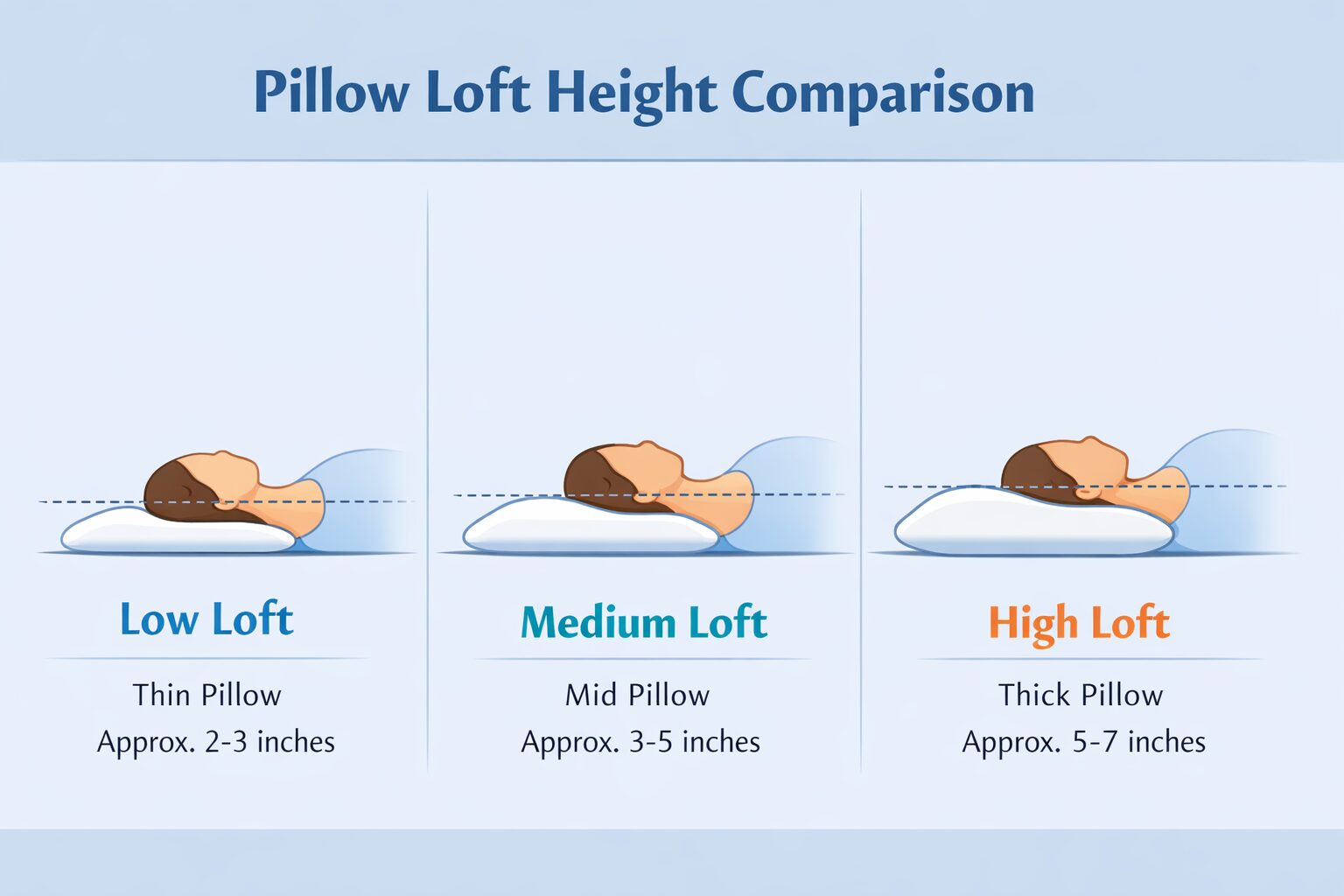
Side sleepers usually need a high-loft pillow to fill the space between the head and mattress. Back sleepers benefit from medium loft, while stomach sleepers should choose low loft.
Shoulder width also matters. People with broader shoulders often need a higher loft pillow for proper support.
Your mattress firmness can also affect pillow choice. A soft mattress allows your body to sink in, meaning you may need a slightly lower loft pillow. A firm mattress may require a higher loft pillow to maintain alignment.
Special Types of Pillows
In addition to standard pillows, there are specialized options designed for specific needs and comfort preferences.
Orthopedic Pillows
Orthopedic pillows are designed to support proper neck and spine alignment. They often have a contoured shape that cradles the neck.
These pillows are commonly recommended for people with chronic neck pain or posture issues.
Body Pillows
Body pillows are long pillows that support the entire body. They are popular among side sleepers and pregnant women.
They help reduce pressure on hips and shoulders while promoting proper alignment.
Travel Pillows
Travel pillows are smaller and designed to support the neck during flights or car rides. U-shaped pillows are the most common type.
They prevent the head from falling forward and reduce neck strain during travel.
Adjustable Pillows
Adjustable pillows allow you to add or remove filling to customize firmness and loft. They are ideal for people who are unsure about the exact support level they need.
These pillows offer flexibility and can adapt as your comfort preferences change.
How Often Should You Replace Your Pillow?
Even the best pillow does not last forever. Over time, pillows lose their shape, collect dust, and stop providing proper support. Sleeping on an old pillow can lead to neck pain and poor sleep quality.
Most pillows should be replaced every 1 to 2 years, depending on the material and how often they are used.
Here are some signs that your pillow needs replacement:
-
It feels flat or lumpy
-
You wake up with neck or shoulder pain
-
It no longer returns to its original shape
-
It has stains or odors that don’t go away
Memory foam and latex pillows usually last longer than synthetic or down pillows. Regular cleaning and using a pillow protector can extend the life of your pillow.
Replacing your pillow on time helps maintain proper support and hygiene.
Common Pillow Buying Mistakes
Many people choose a pillow based only on how soft it feels in the store. However, softness alone does not guarantee good support.
One common mistake is ignoring sleep position. A pillow that works for a back sleeper may not suit a side sleeper. Choosing the wrong loft or firmness can cause neck strain.
Another mistake is buying the cheapest option without considering durability. Low-quality pillows may flatten quickly and need frequent replacement.
Some people also forget to consider allergies or heat sensitivity. If you sleep hot, choosing a breathable or cooling pillow is important.
Avoid these mistakes by focusing on support, material quality, and your personal sleep habits.
Conclusion
Learning how to choose the perfect pillow can greatly improve your sleep quality and overall comfort. The right pillow supports your head and neck, keeps your spine aligned, and matches your sleeping position.
By considering pillow material, firmness, loft, and special features, you can make a smarter buying decision. Don’t overlook the importance of replacing old pillows and avoiding common mistakes.
When you choose a pillow that fits your body and sleep style, you’ll wake up feeling more rested, comfortable, and ready for the day.
FAQs About Choosing the Perfect Pillow
What is the best pillow for neck pain?
Memory foam or orthopedic pillows are often best for neck pain because they provide consistent support and maintain spinal alignment.
How firm should a pillow be?
It depends on your sleeping position. Side sleepers usually need firm pillows, back sleepers need medium firmness, and stomach sleepers should choose soft pillows.
Is memory foam better than down?
Memory foam offers more structured support, while down pillows provide softness and flexibility. The best choice depends on your comfort preference.
How do I know if my pillow is too high?
If your neck feels bent forward or you wake up with stiffness, your pillow may be too high. Your head should stay aligned with your spine.



Leave A Comment
You must be logged in to post a comment.