How to Remove Stains from a Mattress
Your mattress is one of the most important parts of your daily life. You spend nearly one-third of your time sleeping on it, yet it is often the most neglected item in the bedroom when it comes to cleaning. Over time, mattresses collect sweat, spills, dust, body oils, and even accidental stains. These stains not only make your mattress look dirty but can also affect your health, comfort, and sleep quality.
The good news is that you do not need expensive cleaning services or harsh chemicals to clean your mattress. With the right methods and simple household ingredients, you can remove most stains safely at home. In this detailed guide, you will learn how to remove stains from a mattress, what to do before cleaning, and why acting quickly makes a huge difference. Whether the stain is fresh or old, this guide will help you clean your mattress the right way.
Why You Should Remove Mattress Stains Immediately
Many people ignore mattress stains because they are hidden under bedsheets. However, leaving stains untreated can cause several problems over time. Cleaning mattress stains as soon as possible is not just about appearance—it is about hygiene, health, and protecting your investment.
Stains Can Harbor Bacteria and Germs
Mattress stains often come from sweat, urine, food spills, or body fluids. These substances create a moist environment, which is perfect for bacteria, mold, and dust mites to grow. When stains sit for a long time, they can become breeding grounds for harmful microorganisms. This can trigger allergies, asthma, skin irritation, and even unpleasant odors.
By removing stains early, you reduce the risk of bacteria buildup and create a cleaner, healthier sleeping environment.
Old Stains Are Much Harder to Remove
Fresh stains are always easier to clean than old ones. When a stain is left untreated, it penetrates deeper into the mattress layers. Over time, it dries, sets, and bonds with the fabric and foam. This makes the stain more stubborn and difficult to remove later.
Immediate cleaning prevents stains from becoming permanent and saves you time and effort in the long run.
Stains Can Cause Persistent Bad Odors
Even if a stain is not visible, it can still smell. Sweat stains, urine stains, and food spills often leave behind unpleasant odors that worsen over time. These odors can spread across your bedroom and disturb your sleep.
Removing stains early helps eliminate odor-causing bacteria and keeps your mattress smelling fresh.
Stains Reduce Mattress Lifespan
A mattress is a long-term investment. However, repeated exposure to moisture and stains can weaken the mattress materials. Foam can break down faster, fabric can discolor, and internal layers can get damaged.
Regular stain removal helps maintain the structure of your mattress and extends its usable life.
Clean Mattress Improves Sleep Quality
Sleeping on a stained or smelly mattress can be uncomfortable and mentally distracting. A clean mattress feels fresher, looks better, and promotes better sleep hygiene. When your mattress is clean, you are more likely to enjoy deeper and more restful sleep.
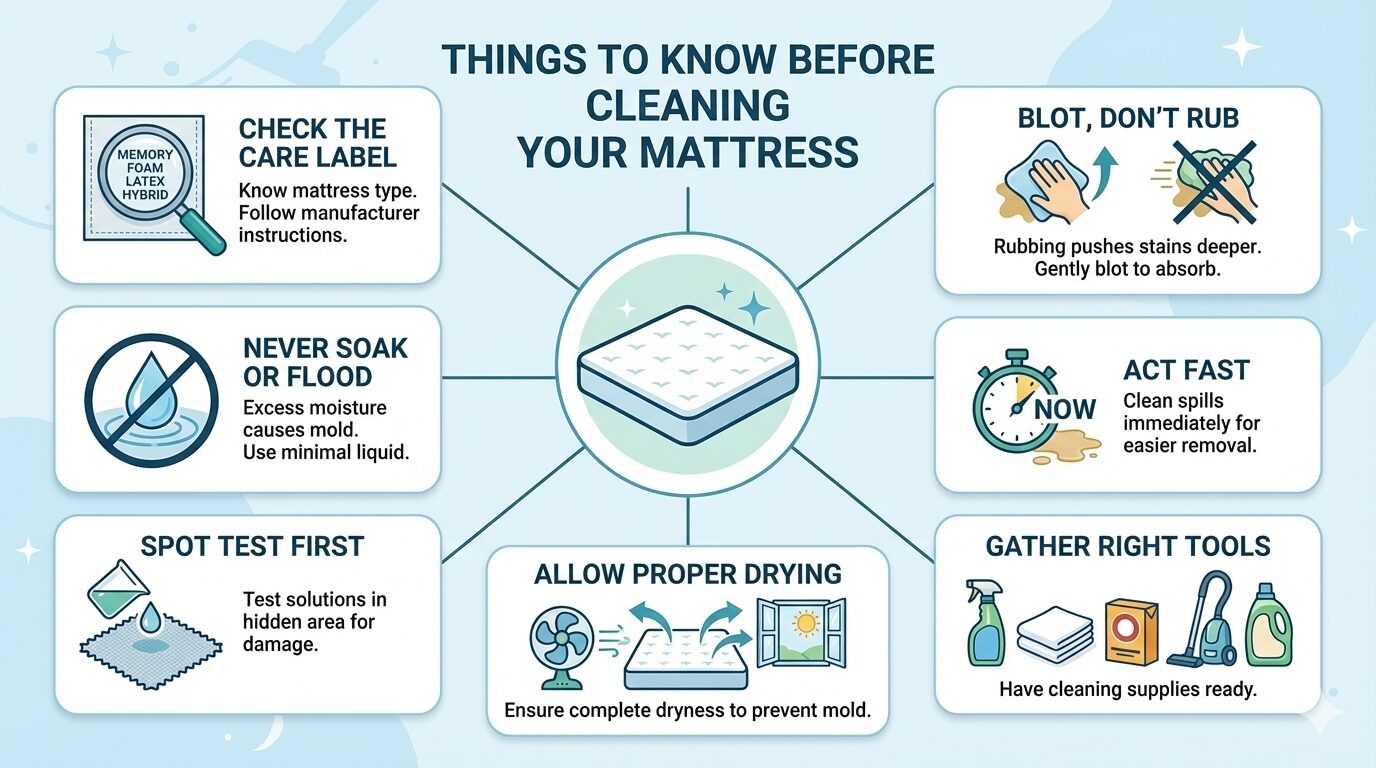
Things to Know Before Cleaning Your Mattress
Before you start cleaning your mattress, it is important to understand a few basic rules. Mattresses are different from carpets or clothes, and cleaning them incorrectly can cause damage. Following these precautions will help you clean stains safely and effectively.
Check the Mattress Type and Care Label
Not all mattresses are made from the same materials. Some common types include memory foam, latex, hybrid, and spring mattresses. Each material reacts differently to moisture and cleaning agents.
Always check the care label or manufacturer’s instructions before cleaning. Some mattresses may not be suitable for strong chemicals or excessive water. Knowing your mattress type helps you choose the safest cleaning method.
Never Soak or Flood the Mattress
One of the biggest mistakes people make is using too much water. Mattresses are thick and absorbent, and once water goes deep inside, it becomes very hard to dry. Excess moisture can lead to mold growth, mildew, and long-term damage.
Always use minimal liquid and focus on spot cleaning. Damp cleaning is safe, but soaking is not.
Spot Test Before Applying Any Solution
Before using any cleaning solution—whether natural or chemical—always do a spot test. Apply a small amount of the solution to a hidden area of the mattress and wait for a few minutes.
This helps you check for fabric discoloration, damage, or reactions. If the fabric looks fine, you can safely proceed with cleaning the stained area.
Blot, Don’t Rub
Rubbing a stain aggressively can push it deeper into the mattress fabric and foam. This can make the stain worse instead of better.
Always blot stains gently using a clean cloth or paper towel. Blotting helps absorb the liquid without spreading it.
Act Fast for Best Results
The sooner you clean a stain, the better the results. Fresh stains respond more easily to cleaning solutions and require less effort. If possible, clean spills and accidents as soon as they happen.
Quick action can prevent stains from setting permanently.
Gather the Right Cleaning Tools
Before you begin, make sure you have basic cleaning tools ready. These may include:
-
Clean white cloths or paper towels
-
Baking soda
-
White vinegar
-
Mild liquid detergent
-
Hydrogen peroxide (if suitable)
-
Spray bottle
-
Vacuum cleaner
Having everything ready makes the cleaning process smooth and effective.
Allow Proper Drying Time
After cleaning, drying your mattress properly is extremely important. A damp mattress can develop mold and unpleasant smells.
Allow enough airflow by opening windows, using fans, or placing the mattress in a well-ventilated area. Never put bedsheets back on until the mattress is completely dry.
How to Remove Common Mattress Stains (Step-by-Step Guide)
Mattress stains can come from many sources, such as sweat, spills, urine, or even blood. Each stain type needs a slightly different cleaning approach. Using the right method helps remove stains without damaging your mattress.
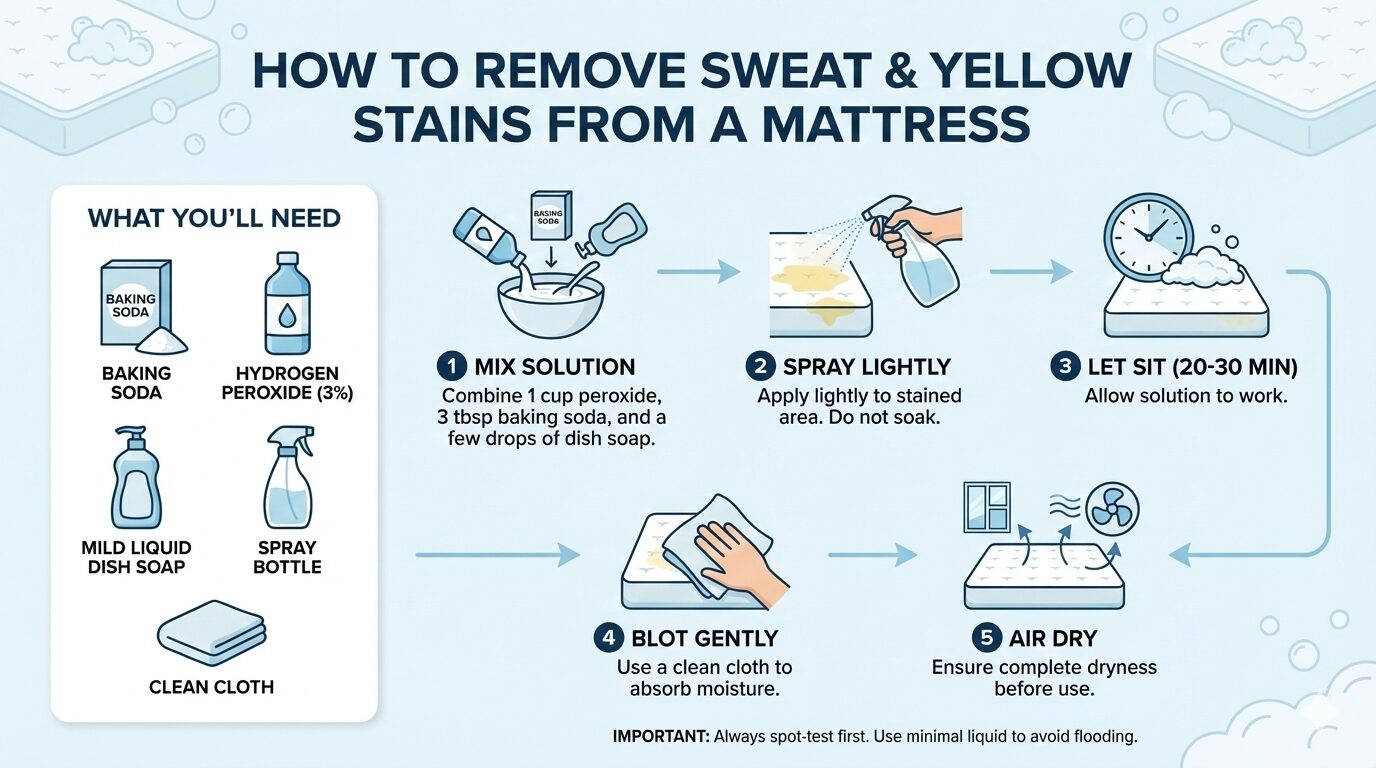
How to Remove Sweat and Yellow Stains from a Mattress
Sweat stains are one of the most common mattress problems. Over time, body sweat mixes with oils and dust, causing yellow discoloration. These stains are especially visible on white mattresses.
What you’ll need:
-
Baking soda
-
Hydrogen peroxide (3%)
-
Mild liquid dish soap
-
Spray bottle
-
Clean cloth
Step-by-step method:
-
Mix one cup of hydrogen peroxide with three tablespoons of baking soda and a few drops of dish soap.
-
Pour the mixture into a spray bottle.
-
Lightly spray the stained area. Do not soak the mattress.
-
Let the solution sit for 20–30 minutes.
-
Blot the area gently with a clean cloth.
-
Allow the mattress to air-dry completely.
This method helps break down sweat residue and brighten yellow stains. Always spot-test first, especially on colored mattresses.
How to Remove Urine Stains from a Mattress
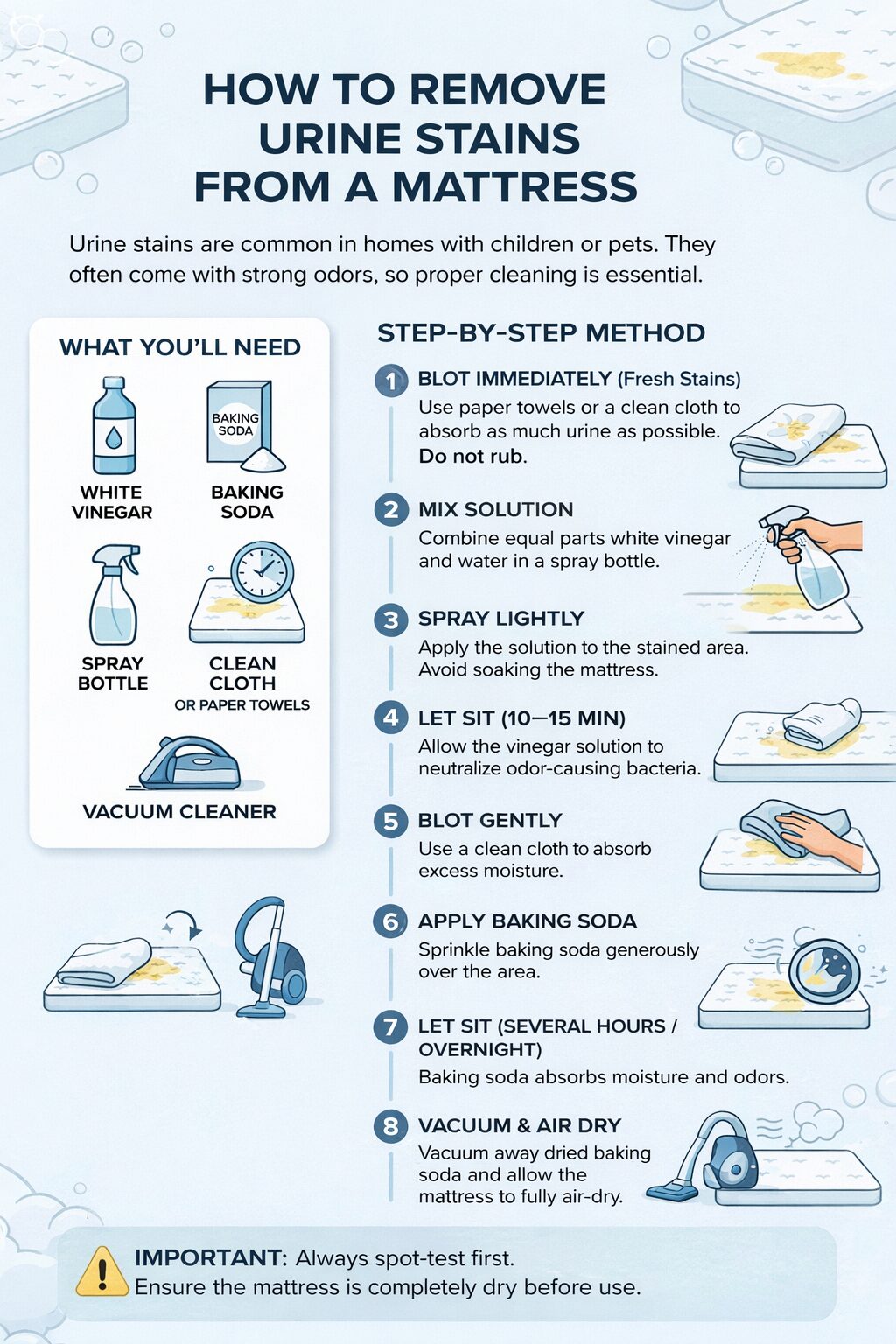
Urine stains are common in homes with children or pets. These stains often come with strong odors, so proper cleaning is essential.
For fresh urine stains:
-
Blot the area immediately using paper towels.
-
Do not rub, as this spreads the stain.
For old or dried urine stains:
-
White vinegar
-
Baking soda
-
Spray bottle
Steps:
-
Mix equal parts white vinegar and water.
-
Spray lightly on the stain.
-
Let it sit for 10–15 minutes.
-
Blot with a clean cloth.
-
Sprinkle baking soda over the area.
-
Let it sit for several hours or overnight.
-
Vacuum the dried baking soda.
Vinegar neutralizes odors, while baking soda absorbs moisture and smell.
How to Remove Blood Stains from a Mattress
Blood stains can look scary, but they are easier to remove when fresh.
Important tip: Always use cold water. Hot water sets blood stains.
Steps:
-
Dampen a cloth with cold water.
-
Blot the stain gently.
-
For stubborn stains, apply hydrogen peroxide directly.
-
Let it bubble for a few seconds.
-
Blot with a clean cloth.
-
Repeat if needed.
Hydrogen peroxide breaks down protein-based stains like blood effectively.
How to Remove Food and Drink Stains
Food and drink spills, such as coffee, tea, or juice, can leave noticeable stains.
What you’ll need:
-
Mild dish soap
-
White vinegar
-
Warm water
Steps:
-
Mix one teaspoon of dish soap with one cup of warm water.
-
Add a small amount of vinegar.
-
Dip a cloth into the solution and blot the stain.
-
Use a dry cloth to absorb excess moisture.
-
Let the mattress air-dry.
This method works well for most food-related stains.
How to Remove Tough and Old Mattress Stains
Old stains are harder to remove because they have settled deep into the mattress fibers. However, with patience and the right technique, many old stains can still be reduced or removed.
Baking Soda Paste Method
-
Mix baking soda with a small amount of water to create a thick paste.
-
Apply the paste directly to the stain.
-
Let it dry completely (4–6 hours).
-
Vacuum the area thoroughly.
Hydrogen Peroxide Deep Cleaning
-
Spray hydrogen peroxide lightly on the stain.
-
Let it sit for 15–20 minutes.
-
Blot gently.
-
Allow proper drying.
Repeat the process if needed, but avoid over-wetting the mattress.
How to Remove Bad Odors from a Mattress
Even if stains are not visible, bad odors can linger inside a mattress.
Baking Soda Deodorizing Method
-
Sprinkle baking soda evenly over the mattress.
-
Let it sit for at least 6–8 hours.
-
Vacuum thoroughly.
Optional: Essential Oils
You can mix a few drops of lavender or eucalyptus oil into baking soda before sprinkling. This adds a fresh scent but is optional.
Ventilation Is Key
Place the mattress near an open window or use a fan to improve airflow. Sunlight also helps kill odor-causing bacteria.
Natural vs Chemical Mattress Stain Removal Methods
Choosing between natural and chemical cleaners depends on your needs and mattress type.

Natural Cleaning Methods
-
Baking soda
-
White vinegar
-
Lemon juice
Pros:
-
Safe and eco-friendly
-
Affordable
-
Gentle on most mattresses
Cons:
-
May take longer for deep stains
Chemical Cleaning Methods
-
Enzyme cleaners
-
Commercial stain removers
Pros:
-
Strong and fast-acting
-
Effective for biological stains
Cons:
-
May contain harsh chemicals
-
Not suitable for all mattresses
For regular cleaning, natural methods are usually the safest choice.
How to Protect Your Mattress from Future Stains
Prevention is always better than cleaning.
Use a Mattress Protector
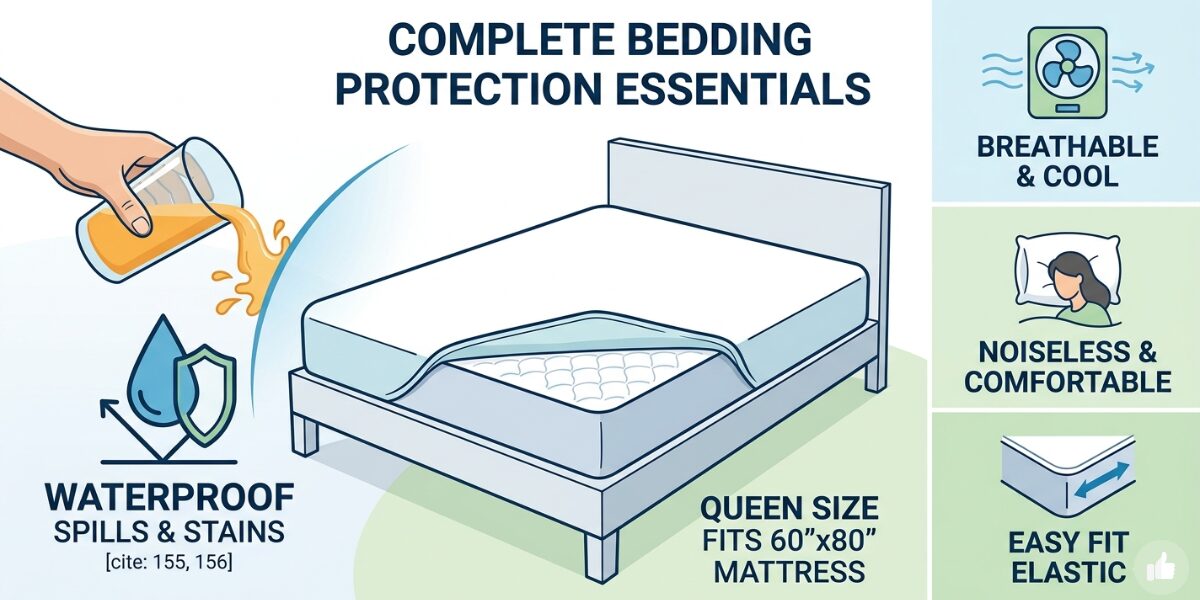
A waterproof mattress protector creates a barrier against spills, sweat, and accidents. It is easy to remove and wash.
Clean Bedding Regularly
Wash bedsheets every one to two weeks to prevent sweat and dirt buildup.
Vacuum Your Mattress
Vacuuming once a month removes dust, dead skin cells, and allergens.
Avoid Eating on the Bed
Food spills are one of the easiest stains to prevent.
Conclusion
Keeping your mattress clean is essential for better sleep, good health, and long-term comfort. Mattress stains may seem harmless at first, but if ignored, they can lead to odors, bacteria growth, and permanent damage. By acting quickly and using the right cleaning methods, you can remove most stains safely at home.
Simple ingredients like baking soda, vinegar, and hydrogen peroxide are highly effective when used correctly. Regular maintenance, proper drying, and using a mattress protector can help keep your mattress fresh and stain-free for years. A clean mattress not only looks better but also helps you sleep better every night.
Looking for a fresh start? Explore premium mattresses, beds, and home furniture at Easy Home Furniture for healthier, more comfortable sleep.
FAQs
Can I clean my mattress with baking soda only?
Yes, baking soda is excellent for deodorizing and light stain removal.
How long should baking soda sit on a mattress?
For best results, leave it for at least 6 hours or overnight.
Is hydrogen peroxide safe for all mattresses?
It is safe for most white mattresses but can bleach colored fabrics. Always spot-test first.
How often should I clean my mattress?
Deep clean every 3–6 months and spot clean whenever stains appear.
Can old mattress stains be completely removed?
Some old stains may fade rather than disappear completely, but proper cleaning can significantly improve their appearance.

Leave A Comment
You must be logged in to post a comment.